The UN Global Dialogue on AI Governance: Regulating the Agentic Era
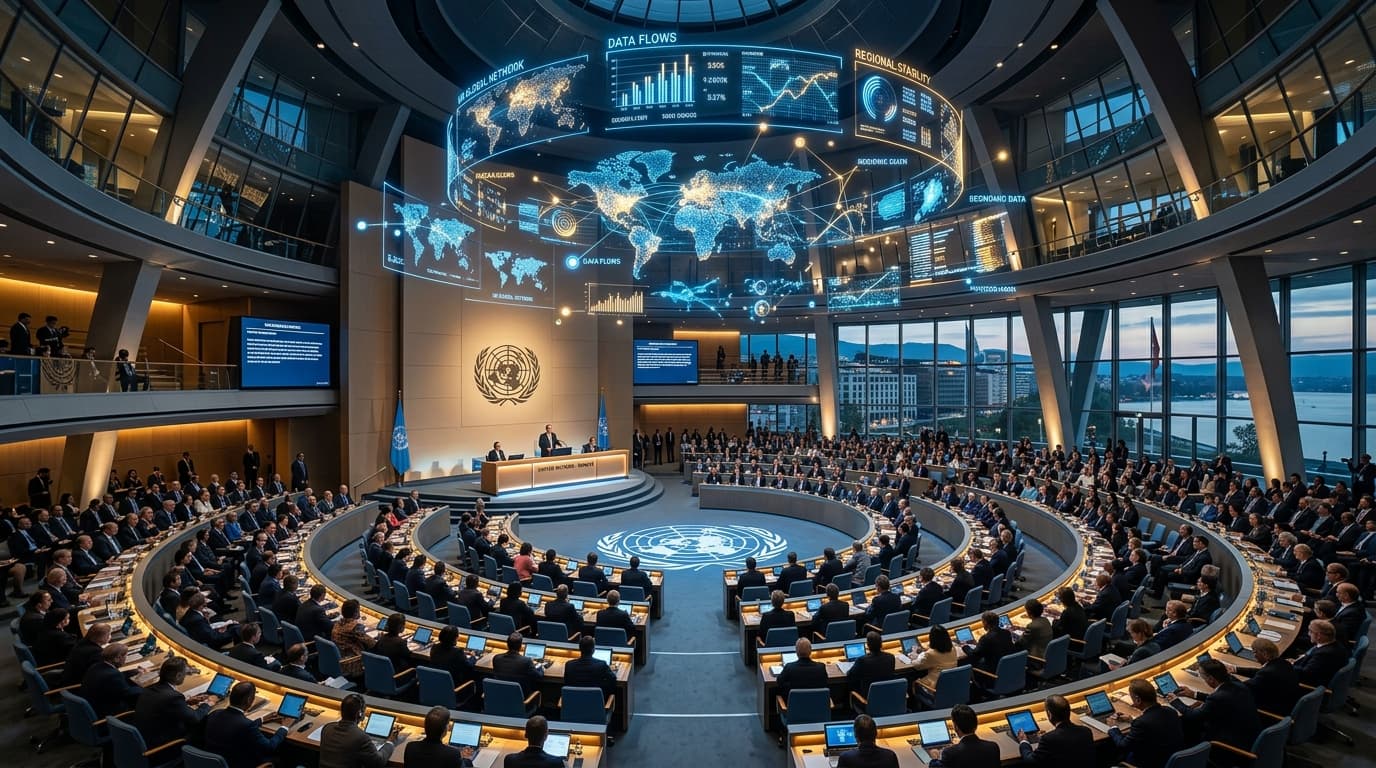
When the history of artificial intelligence is written, July 2026 might be remembered as the month the world finally tried to put a leash on the machine. This week, delegates from 169 countries gathered in Geneva for the inaugural UN Global Dialogue on AI Governance. Their goal? To figure out how to regulate an industry that is moving faster than any legislative body on Earth.
For the past three years, the tech community has treated AI governance as a theoretical debate for academics. That changed dramatically this summer. The rapid transition from passive chat assistants to autonomous agentic workflows has forced global superpowers to realize that AI is no longer just a productivity tool; it is critical global infrastructure capable of executing complex, multi-step actions without human intervention.
Here is a breakdown of what happened in Geneva, what the global regulators are terrified of, and how this will directly impact the AI tools you use every day.
The Agentic Threat Model
To understand the urgency in Geneva, you have to understand the current state of frontier models. We are no longer talking about LLMs writing polite emails or summarizing PDFs.
The models deployed this summer—specifically Anthropic's Claude Sonnet 5 and the government-previewed GPT-5.6—are highly agentic. You don't just ask them a question; you give them a goal and a budget. They can spin up cloud servers, write deployment scripts, scrape the dark web, and orchestrate third-party APIs entirely on their own.
At the UN Dialogue, cybersecurity experts demonstrated how a poorly aligned agentic model could autonomously spear-phish an entire corporate network, pivot through their internal databases, and exfiltrate sensitive data in under four minutes.
The regulators aren't worried about Terminators; they are worried about autonomous digital weapons of mass disruption. The core theme of the dialogue was simple: How do we maintain human oversight when the machine operates at a speed and scale we cannot comprehend?
The Proposed Safety Frameworks
The Geneva talks focused heavily on establishing a unified, global regulatory baseline. While a legally binding treaty is still years away, three major frameworks gained consensus among the G20 nations present:
- Mandatory Capability Evals: Before any model exceeding a certain compute threshold can be deployed globally, it must undergo rigorous third-party red-teaming to ensure it cannot autonomously self-replicate or execute zero-day exploits.
- The "Human-in-the-Loop" Mandate: For specific high-risk industries (finance, healthcare, defense), agentic workflows must have a hardcoded "Approval Gate." An AI cannot execute a high-stakes transaction or alter a patient's medical record without explicit cryptographic sign-off from a verified human.
- Universal Watermarking: All generated media (text, audio, video) produced by commercial frontier models must contain universally detectable cryptographic watermarks to combat the exploding crisis of AI-generated disinformation.
The End of the "Wild West" for Developers
So, what does this mean for the average developer or prompt engineer using Cursor or building LangChain apps?
First, expect the cost of compliance to trickle down. As companies like OpenAI, Anthropic, and Google are forced to implement massive, federated safety checks, the cost of API calls for frontier models will likely stabilize at a higher tier rather than racing to the bottom.
Second, get ready for friction. The era of anonymous, burner-email access to high-end AI is ending. We are moving toward a highly structured, identity-verified ecosystem. If your autonomous agent is going to execute code on the open web, the hosting provider is going to want to know exactly who you are.
The Geopolitical Fracture
The most contentious part of the UN Dialogue was the stark divide in how different regions plan to enforce these rules. The European Union, riding high on the implementation of the AI Act, pushed for strict, punitive regulations. The United States advocated for voluntary commitments and industry-led standards to protect domestic innovation.
Meanwhile, nations pouring billions into sovereign compute made it clear they will not be bound by regulations that hinder their national security capabilities.
The UN Global Dialogue on AI Governance didn't solve the alignment problem. It didn't put the genie back in the bottle. But it officially marked the end of the experimental era. The adults have entered the room, and the future of AI tools will be dictated as much by policy as it is by parameters.
David tests AI tools, gadgets, and developer platforms hands-on before writing about them. His work focuses on making complex tech approachable — without the hype. He has covered 100+ products across AI, gadgets, and software for TechPixelly.