AI-Powered Real-Time Fan Engagement Analytics at FIFA 2026
TL;DR
The FIFA 2026 World Cup is setting a monumental new benchmark for technological innovation in live sports. By leveraging advanced AI-powered real-time fan engagement analytics, tournament organizers are transforming how fans interact with the beautiful game. From sophisticated crowd sentiment analysis utilizing computer vision to hyper-personalized stadium experiences and dynamically generated interactive broadcasts, AI is deeply embedded in the tournament's fabric. This comprehensive guide explores the groundbreaking AI tools, ethical considerations, and strategies deployed across stadiums in North America to create the most immersive, data-driven fan experience in history.
The AI Revolution in Sports Analytics
When the FIFA World Cup expands to 48 teams and spans across three massive nations—the United States, Canada, and Mexico—the logistical, operational, and experiential challenges multiply exponentially. However, these challenges have catalyzed unprecedented technological opportunities. FIFA 2026 is widely anticipated and explicitly engineered to be the most technologically advanced sporting event in human history. At the absolute core of this transformation is AI-powered fan engagement analytics.
For decades, the bulk of sports analytics focused primarily on the players and the gameplay. We saw the rise of sophisticated metrics tracking running speeds, passing accuracy, tactical formations, and physiological exertion. While this on-pitch data analytics remains a crucial component of modern football, the focus of the industry has radically broadened to include the lifeblood of any sport: the fans.
Real-time fan engagement analytics uses sophisticated artificial intelligence models to ingest, process, and interpret vast oceans of data generated by spectators. Whether they are inside the stadium in Mexico City cheering for their nation, participating in a massive fan zone in Toronto, or watching from a living room in Tokyo, fans produce a continuous, rich stream of actionable data. AI tools process this data instantaneously, enabling organizers, broadcasters, and sponsors to deliver tailored experiences that keep engagement levels at an all-time high.
This shift marks a transition from passive consumption to active, personalized participation. AI is the bridge that connects the emotion of the crowd with the operational mechanics of the tournament.
Real-Time Crowd Sentiment Analysis
One of the most awe-inspiring and technologically complex applications of AI at FIFA 2026 is real-time crowd sentiment analysis. Imagine a stadium packed with 80,000 roaring fans. Traditionally, gauging the mood, tension, and excitement of this massive crowd was an inexact science, relying almost entirely on the intuition of commentators, the subjective experience of stadium directors, or the sheer decibel volume of the noise.
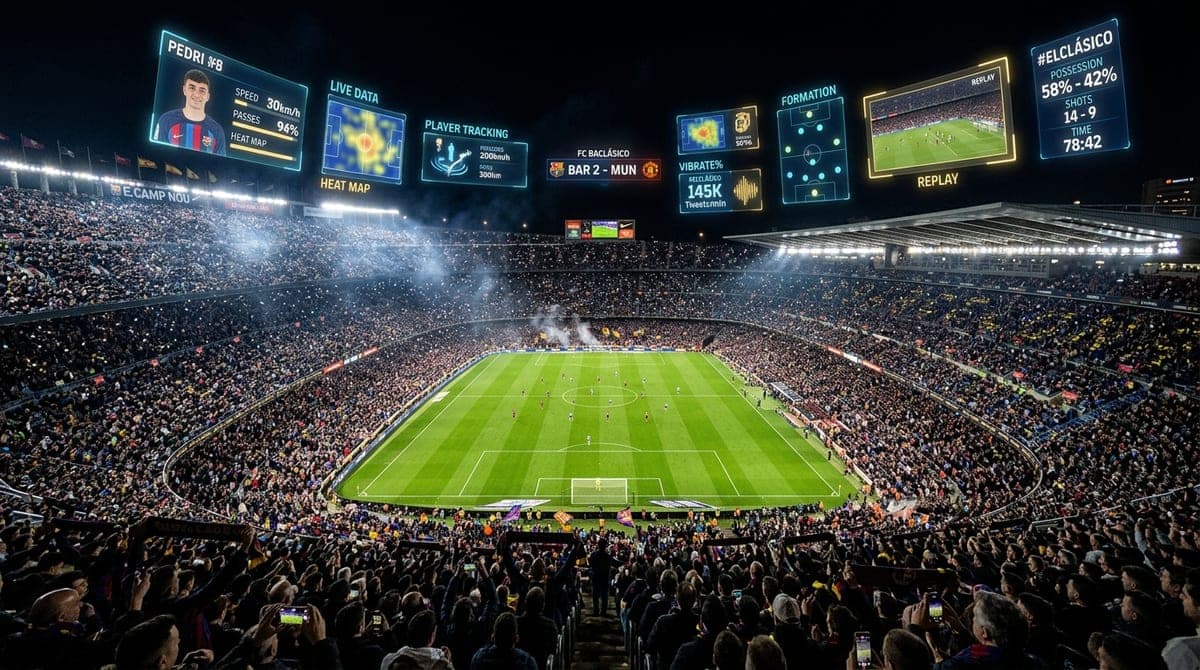
Today, the approach is highly quantified. Advanced computer vision algorithms and sophisticated spatial audio processing networks are deployed seamlessly throughout the 16 host stadiums. These localized AI systems rapidly analyze thousands of data points every second—tracking facial expressions, macro body language, and distinct acoustic patterns to determine the collective emotional state of different sections of the stadium in real-time.
When a home team scores a spectacular goal, the AI instantly quantifies the euphoria, mapping the explosion of joy across different tiers of the stadium. Conversely, if a highly controversial referee decision is made (even after VAR review), the system measures the specific spike in tension, confusion, and frustration.
This isn't just about collecting interesting but passive statistics; it’s about generating actionable, immediate insights. For example, if the AI detects that a particular section of the stadium is experiencing a significant lull in energy during a slow period of the match or at halftime, stadium operators receive automated prompts. They can instantly trigger targeted entertainment, such as an interactive jumbotron game focusing on that specific crowd sector, a synchronized light and audio show, or the deployment of stadium mascots, to effectively re-energize the fans.
Furthermore, this rich sentiment data is invaluable for global broadcasters. It allows broadcast directors to cut to the most emotionally resonant fan reactions—whether it's tears of joy or the agony of defeat—perfectly timed with the on-field action. This creates a much more compelling, deeply human narrative for the billions of viewers at home. For deeper insights into how visual data is securely processed at scale, check out our comprehensive guide on computer vision in modern applications.
Hyper-Personalized Stadium Experiences
The fan journey at FIFA 2026 begins long before the referee blows the whistle for kickoff and extends well beyond the final whistle. AI ensures that this entire journey is highly personalized, frictionless, and memorable. Through the official tournament application, fans are encouraged to opt-in to share their preferences, historical engagement, real-time location data, and ticketing information.
Advanced AI algorithms analyze this data to act as an incredibly efficient, personal digital concierge for every single attendee. As a fan approaches the stadium precinct, the app, powered by predictive AI, suggests the absolute fastest entry gate based on real-time crowd flow analysis from drone feeds and turnstile data. Once inside the venue, the personalization deepens. If the fan's favorite player is warming up on the pitch, they receive a targeted push notification.
The integration of AI extends heavily into stadium concessions, merchandising, and hospitality. By analyzing individual purchasing patterns alongside current stadium macro-conditions (such as the ambient temperature, the time of the match, and the current scoreline), the AI engine can dynamically offer personalized promotions. Is it a particularly scorching afternoon in Miami or Monterrey? The app might automatically send a 15% discount code for a cold beverage at the specific concession stand that currently has the shortest queue, complete with an augmented reality (AR) navigation overlay to guide the fan there using the most efficient physical route.
This level of hyper-personalization transforms what can often be a daunting, chaotic stadium experience into a seamless, highly enjoyable event. To understand the underlying mechanics and mathematical models of these personalized recommendation systems, read our deep dive into predictive machine learning models.
Augmented Reality and Gamification
Another frontier where AI is making a massive impact at FIFA 2026 is the integration of Augmented Reality (AR) and gamification within the stadium environment. AI doesn't just process data; it powers new realities.
Using their smartphones, fans in the stadium can point their cameras at the pitch. The AI instantly recognizes the players, the ball, and the spatial dimensions of the field. It then superimposes real-time data overlays—such as a player's current running speed, their heat map for the last ten minutes, or the exact trajectory and speed of a free kick.
Gamification algorithms take this a step further. Fans can participate in massive, stadium-wide predictive games. "Will the next corner kick result in a shot on target?" "Which player will cover the most distance in the next five minutes?" The AI rapidly calculates the odds, manages the micro-transactions or points systems, and updates global and stadium leaderboards in real-time. This keeps fans highly engaged even during breaks in play or slower tactical periods of the match. Learn more about how to build these interfaces in our post on AR development frameworks for 2026.
The Technology Stack Behind It All
Processing the data of millions of fans in real-time, across multiple countries and time zones, requires a colossal and highly sophisticated technology stack. It involves a tightly orchestrated symphony of edge computing, ultra-low latency 5G networks, and powerful cloud-based AI models.
Edge computing plays a pivotal and indispensable role here. Instead of sending all the raw video, audio, and sensor data to a centralized cloud server—which would inevitably introduce unacceptable latency and bandwidth bottlenecks—massive amounts of data are processed locally at the stadium's "edge." Dedicated AI inference servers located within the stadium infrastructure handle the heavy lifting. This allows for the instant decision-making required for real-time sentiment analysis, AR overlays, and dynamic crowd control. Only the aggregated, processed insights are then synced to the global cloud for broader tournament analytics.
For developers, data scientists, and business analysts looking to harness similar analytical power for their own applications, utilizing robust AI analytics platforms is essential. Building these systems from scratch is rarely feasible.
Platforms like DataRobot, alongside bespoke cloud solutions provided by major tech sponsors, ensure that the massive influx of data during a World Cup match is handled with absolute zero downtime. The backend infrastructure also relies heavily on advanced natural language processing models capable of monitoring and analyzing social media sentiment in dozens of languages simultaneously.
Operational Efficiency and Safety
While hyper-personalized fan engagement is undoubtedly the glamorous, forward-facing side of AI at FIFA 2026, its role in operational efficiency, logistics, and most importantly, safety, is arguably far more critical to the tournament's success. Managing the secure ingress and egress of up to 90,000 people at a single venue is a monumental logistical task.
AI-driven predictive modeling is deployed to actively anticipate crowd bottlenecks and crush points long before they actually happen. By constantly analyzing real-time data from thousands of security cameras, IoT turnstiles, and localized Wi-Fi connection densities, the AI models can predict congestion points with astonishing accuracy. Stadium management command centers receive automated alerts and can then proactively open additional gates, deploy more stewards, or seamlessly redirect fans via dynamically updated digital signage to ensure a smooth, safe flow of foot traffic.
Furthermore, AI vastly enhances traditional security protocols. Advanced computer vision algorithms are specially trained to detect anomalies in crowd behavior that might indicate an impending emergency, such as a sudden panic, a rapidly forming fight, or a medical incident in the densely packed stands. This allows medical and security personnel to be dispatched with pinpoint accuracy, literally seconds after an incident begins to unfold, significantly reducing response times and potentially saving lives.
The Second Screen: Engaging the Global Audience
While millions will be lucky enough to attend the matches in North America in person, billions will watch from their homes, local pubs, and community spaces around the world. For this massive global audience, AI is completely reinventing the "second screen" experience.
Through the official digital platforms and partnered broadcasting apps, fans receive real-time, AI-generated insights that go far beyond standard historical possession statistics. The AI calculates complex metrics like "Expected Goals" (xG) and "Expected Threat" (xT) dynamically, predicts the probability of a successful pass in real-time based on the exact spatial positioning of all 22 players, and even analyzes individual player fatigue based on their biomechanical movements on the pitch.
But it is the fan-to-fan and fan-to-broadcast interaction where the AI truly shines. Massive Natural Language Processing (NLP) algorithms rapidly curate and filter millions of social media posts, live chats, and forum comments. The AI acts as an ultra-intelligent editor, highlighting the most insightful tactical analysis, the funniest memes, or the most passionate fan takes, seamlessly integrating them into the official broadcast platforms and companion apps.
Interactive polls and game predictions are generated on the fly based on the unfolding narrative of the game. If a team is awarded a crucial penalty in the 89th minute, the AI instantly pushes a localized poll to viewers asking where the player will place the shot, aggregating the results of millions of fans worldwide in under three seconds. If you're interested in building similar highly interactive, scalable platforms, our technical tutorial on integrating scalable AI APIs into React web apps is an excellent starting point.
Sponsorship and AI-Driven ROI
For the massive corporate sponsors of FIFA 2026, AI analytics provides an unprecedented level of granularity when it comes to measuring Return on Investment (ROI). Traditional sponsorship relied heavily on estimating broadcast viewership and brand exposure time.
AI changes the game entirely. Using computer vision, sponsors can now track exactly how many times their logo was clearly visible on screen, for how long, and under what context (e.g., during a goal celebration vs. a slow period of play). More importantly, by tying into the fan engagement platforms, sponsors can measure direct conversion rates. If a sponsor runs an interactive AR ad during halftime on the app, the AI tracks the engagement depth, click-through rates, and subsequent purchasing behavior, providing a pristine, data-driven report on campaign effectiveness. We explore this further in our article on the future of AI in digital marketing.
Privacy vs. Personalization: The Ethical Balance
With such pervasive, continuous data collection, the massive elephant in the room is privacy. FIFA 2026 organizers and their tech partners have had to carefully navigate the incredibly delicate balance between delivering hyper-personalized, magical experiences and fundamentally respecting fan privacy and data sovereignty.
The strict implementation of "Privacy by Design" is a non-negotiable core principle in the AI architecture of the entire tournament. Data used for crowd sentiment analysis and general flow tracking is heavily aggregated and anonymized at the edge before it even reaches the cloud. Facial recognition, where utilized for express entry or personalized experiences, is strictly opt-in and bound by stringent, overlapping data protection regulations spanning the US, Canada, and Mexico.
Crucially, fans are given granular control over their digital footprint through a centralized privacy dashboard built directly into the tournament app. This allows them to clearly dictate exactly what information they share, with whom they share it, and for exactly how long. This radical transparency is absolutely crucial in maintaining public trust, proving that powerful AI can be leveraged for mass engagement without compromising individual civil liberties. We cover the rapidly evolving legal and ethical landscape of artificial intelligence in our comprehensive deep dive into AI ethics and data privacy legislation for 2026.
The Future of Interactive Broadcasts
Looking beyond the summer of 2026, the technologies pioneered and stress-tested at this World Cup will undoubtedly become the new gold standard for all live entertainment globally—from local league sports to massive music festivals. We are rapidly moving towards an era of fully interactive, personalized broadcasting.
Imagine a near-future where you can choose to watch the game from the exact perspective of any player on the pitch, rendered seamlessly in real-time VR. This would be accompanied by bespoke commentary generated by an AI that perfectly knows your level of football knowledge, your favorite team, and your preferred tone (analytical vs. passionate). The AI analytics engine will dynamically adjust the graphics, statistics, and replay angles presented on your screen based entirely on what you interact with most.
The convergence of generative AI, ultra-fast 5G, and spatial computing will permanently blur the lines between being a passive spectator and an active participant in the sporting event.
Conclusion
The FIFA 2026 World Cup serves as the ultimate proving ground for the immense, transformative potential of AI in live event management and fan engagement. By moving decisively beyond simple, historical data collection to real-time, actionable, and predictive insights, the integration of AI is creating an ecosystem where the fan is not just an observer, but a central, active component of the event's narrative.
From ensuring physical safety through predictive crowd management and edge computing, to delivering hyper-personalized AR experiences and real-time emotional analytics, AI is the undeniable, silent playmaker of the entire tournament. As these sophisticated technologies continue to evolve, optimize, and become more accessible to smaller organizations, we can expect the fan experience across all sports and live events to become increasingly immersive, deeply interactive, and highly intelligent.
The beautiful game is evolving at a breakneck pace, and thanks to the power of artificial intelligence, the way we experience it will simply never be the same again.
David tests AI tools, gadgets, and developer platforms hands-on before writing about them. His work focuses on making complex tech approachable — without the hype. He has covered 100+ products across AI, gadgets, and software for TechPixelly.