The Diamond Semiconductor Revolution: How Diamond Chips Are Saving High-Power AI
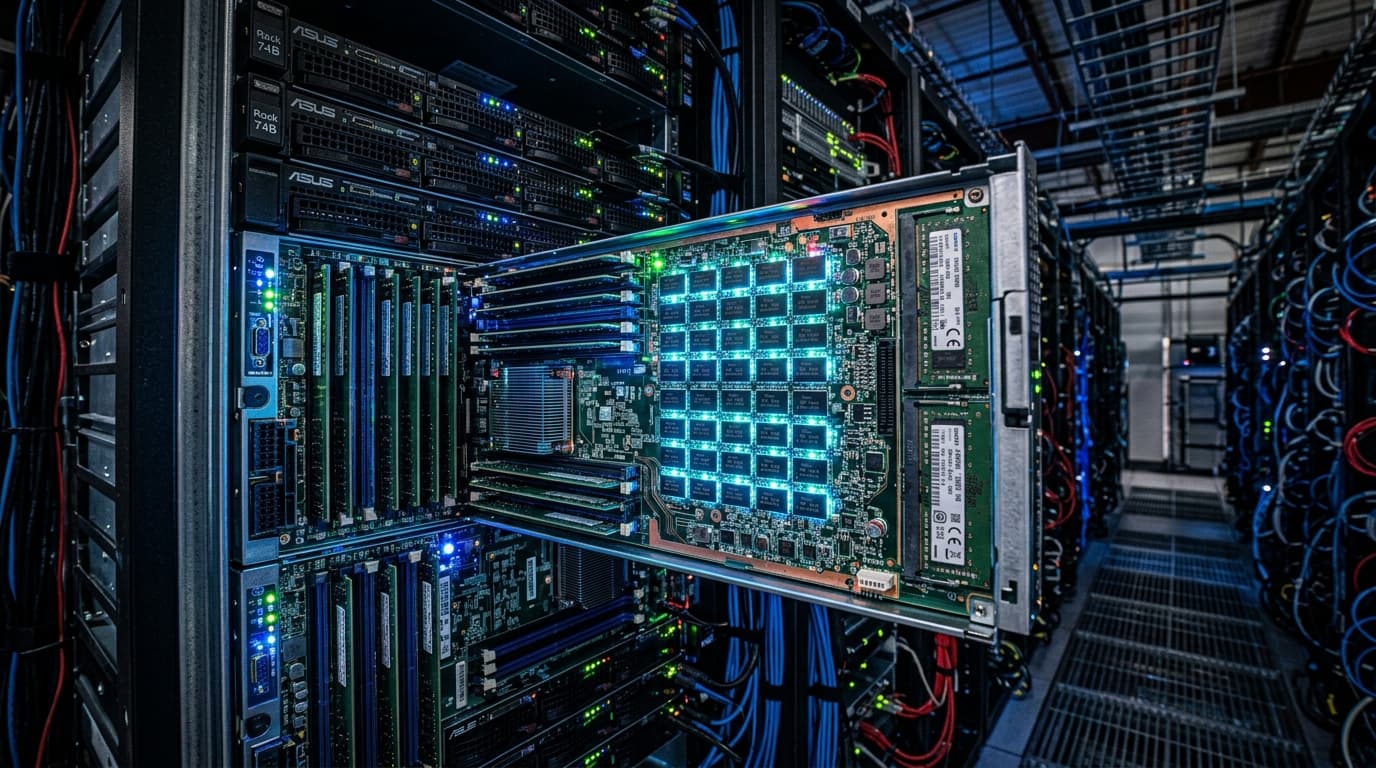
The AI industry has a massive heat problem. As artificial intelligence models grow exponentially more complex, the silicon chips powering them are running hotter than ever before. Traditional cooling methods are reaching their physical limits, threatening to bottleneck the entire "Intelligence Supercycle" of 2026.
Enter the Diamond Semiconductor Revolution.
This isn't science fiction anymore. As of July 2026, the diamond semiconductor industry is officially transitioning from laboratory research to industrial-scale commercial manufacturing. Here is why diamond is the ultimate savior for high-power AI.
Why Diamond? The Ultimate Thermal Conductor
Silicon has been the backbone of electronics for decades, but it has severe limitations when dealing with extreme heat and high voltages. Diamond, on the other hand, possesses "superhero" properties for electronics:
- Extreme Thermal Conductivity: Diamond's thermal conductivity is often exceeding 2000 W/m·K—which is roughly four to five times higher than copper and vastly superior to silicon. It can move heat away from processors faster than any other known material.
- Wide Bandgap: Diamond can withstand electric fields up to 50 times higher than silicon before breaking down. This makes it perfect for high-voltage power electronics needed in massive AI data centers, 5G/6G networks, and EVs.
Commercialization is Happening Now
The biggest news this month is the shift to commercial scale.
- Japan Leads the Way: A startup originating from Saga University, appropriately named Diamond Semiconductor, officially commenced commercial operations this July. Their new facility is manufacturing diamond epitaxial wafers and finished devices specifically for high-voltage power electronics and space exploration.
- Massive Chinese Investment: China has launched a major project in the Zhengzhou High-tech Zone to establish a fully integrated industrial chain for diamond semiconductors. Utilizing 500 microwave plasma chemical vapor deposition (MPCVD) systems, they aim to mass-produce single-crystal diamond wafers for AI and communications.
- European Expansion: Diamond Foundry is expanding operations in Spain, building a new plant to supply advanced synthetic diamond materials specifically designed for the semiconductor industry.
Heterogeneous Packaging: The Immediate Solution
We aren't going to see fully diamond CPUs right away. Instead, major players like TSMC and Samsung are focusing on chip-level and package-level diamond integration.
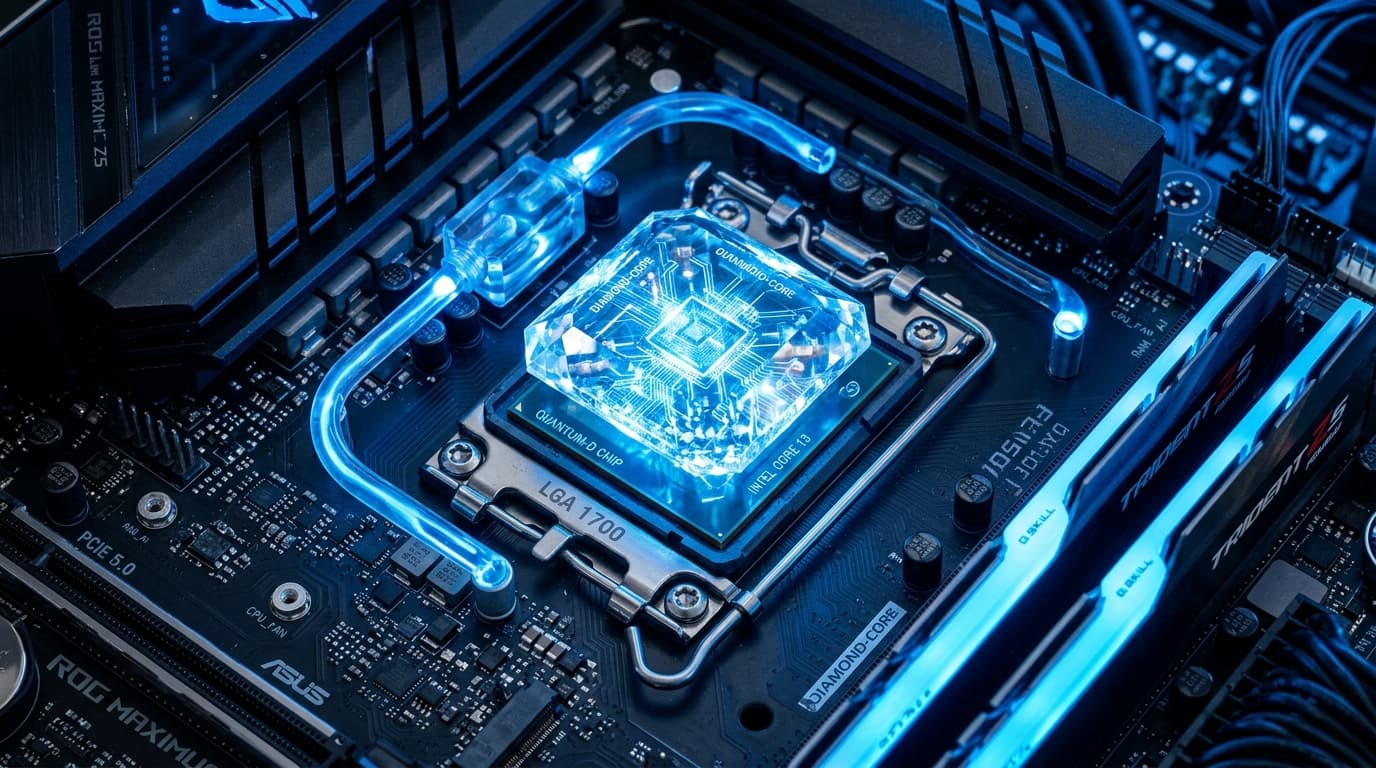
This involves using diamond as a "thermal management interposer" in heterogeneous packaging. By placing a synthetic diamond substrate directly beneath the hottest parts of a high-performance computing (HPC) AI chip, manufacturers can rapidly siphon heat away. This allows the AI processors to run at higher clock speeds for longer durations without thermal throttling.
The Quantum Future
Beyond just cooling, researchers at institutions like Penn State and UChicago are mapping the roadmap for superconducting diamond. By carefully tuning elements like boron doping density, they are developing "designer" diamond that can integrate both superconducting and semiconductor behaviors. This could be the foundational material for the next generation of quantum computers.
The Bottom Line
The AI boom requires infrastructure that silicon alone simply cannot support forever. The commercialization of diamond semiconductors happening right now in 2026 is the critical hardware breakthrough needed to sustain the software revolution. The future of tech isn't just silicon; it's sparkling.
Rohan tracks emerging technology at the intersection of research and real-world adoption. With a background in data science and five years covering tech for publications across three continents, he specialises in explaining what a trend actually means for people and businesses — not just the hype.