5 AI and Tech Trends That Are Changing Everything in 2026
Quick Summary
The biggest tech trends of 2026 aren't hype — they're already changing how everyday people use technology. AI agents that take actions autonomously, AI-generated media flooding every platform, the rise of local AI on your device, the collapse of traditional app stores, and a new era of search. Here's what's actually happening and why it matters to you.
2026: The Year AI Stopped Being a Tool and Became an Actor
Something shifted in 2025-2026. AI tools went from "things that help you do stuff" to "things that do stuff for you."
You no longer just ask ChatGPT to write something. You ask an AI agent to research a topic, write the article, format it, upload it to your blog, and schedule it — while you focus on something else.
This is the inflection point. Here are the five trends driving it.
1. AI Agents Take Over Repetitive Work
The defining tech development of 2026 isn't a new chatbot — it's the arrival of practical AI agents.
An AI agent isn't just a chatbot. It's a system that can take a goal, break it into steps, use tools (browsers, apps, code), and complete multi-step tasks with minimal human involvement.
OpenAI's Operator, Anthropic's Claude with computer use, Google's Project Mariner, and a dozen startups are all racing to make this practical—a shift we cover in far more depth in our full breakdown of why agentic AI is replacing chatbots. In 2026, early use cases are already mainstream:
- Email management agents that sort, draft replies, and flag priorities
- Research agents that browse the web, compile findings, and produce reports
- Development agents that write, test, and debug code autonomously
- Customer service agents handling tier-1 support without human escalation
What this means for you
If you do repetitive knowledge work — data entry, email responses, basic research, scheduling, report generation — AI agents are already automating it. The workers who thrive are those who learn to direct agents rather than resist them.
2. AI-Generated Content Is Everywhere (And You Can't Always Tell)
In 2024, you could usually spot AI-generated images and text. In 2026, you often can't.
The models have improved dramatically. Midjourney v7 produces photorealistic images that fool expert reviewers (though it still stumbles on the details, as we noted in Midjourney V8.1 and why hands are still a problem). Claude and GPT-4o produce text that passes most AI detectors. Video generation (Sora, Runway Gen-4) creates synthetic video indistinguishable from real footage to casual viewers, a race we cover directly in Sora 2 vs. Veo 3.
The consequences are significant:
For content creators: The barrier to producing professional-looking content has collapsed. A solo creator with $50/month in AI subscriptions can produce content that previously required a small team.
For consumers: Skepticism is now a required skill. Viral photos, quotes attributed to celebrities, news video — all of these have synthetic versions circulating.
For platforms: Every major social platform is now an AI content arms race. YouTube, Instagram, TikTok, and X are all simultaneously allowing and trying to detect AI-generated content.
The trust gap
The deeper trend: trust in digital media is at historically low levels. This creates an opportunity for creators who lead with transparency, personal experience, and authentic voice — precisely what AI can't replicate.
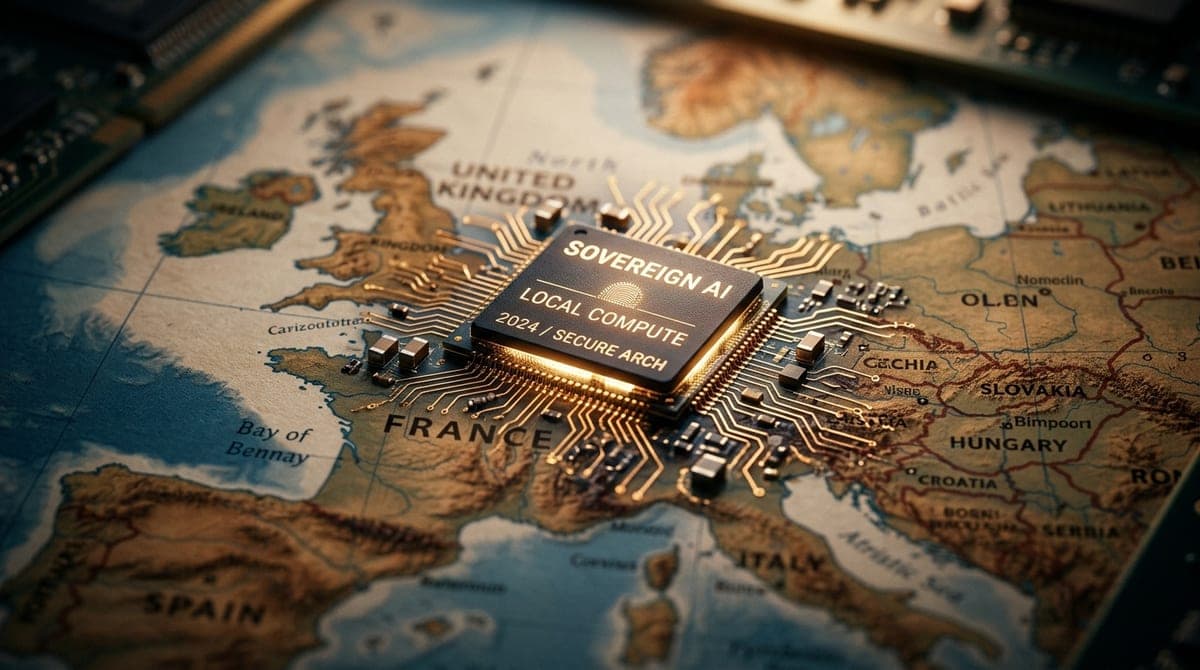
3. AI Moves to Your Device (On-Device AI Changes Everything)
Until 2024, AI required the cloud. Every query went to a server, processed there, and returned a result. That meant latency, internet dependency, and privacy concerns.
In 2026, AI is increasingly running locally — on your phone, laptop, or tablet.
What's changed:
- Apple Intelligence (on-device AI) shipped on all new iPhones and Macs
- Google's Gemini Nano runs locally on Pixel phones and high-end Android
- Microsoft's Copilot+ PCs include dedicated AI processing chips (NPUs)
- Qualcomm and Apple Silicon are racing to maximize local AI performance
Why on-device AI matters:
Privacy: Your data never leaves your device. Sensitive documents, health data, and private conversations can be processed by AI without any company seeing them.
Speed: No round trip to the server. Instant responses for tasks like voice transcription, photo editing, and writing assistance.
Offline capability: Works without internet. Your AI assistant is available on a plane, in a cabin, anywhere.
Battery: Modern AI chips process at a fraction of the power of sending queries to the cloud. Longer battery life for AI tasks.
4. Search Is Being Reinvented (The End of Blue Links)
Google has dominated search for 25 years with essentially the same model: type a query, get a list of links. In 2026, that model is fracturing.
AI Overviews (Google's AI-generated answers at the top of search) now appear for nearly half of all queries. Users get answers without clicking links — which is driving significant traffic declines for many websites, a shift we cover in detail in how to optimize your content for AI answer engines.
Meanwhile, alternative search behaviors are growing:
- ChatGPT and Claude as search replacements for question-based queries
- Perplexity AI for research with citations, which we put through its paces in our brutally honest Perplexity review
- TikTok as a search engine for younger demographics
- Reddit threads appearing prominently in Google for "real person" opinions
What this means for content creators
The old SEO playbook — write a keyword-stuffed article and rank for informational queries — is less effective. The new model:
- Firsthand experience content (reviews, tutorials, case studies) performs better
- Unique data and insights can't be summarized by AI because they're original
- Community and trust matter more — E-E-A-T is now a concrete ranking factor
- Long-tail, specific queries still produce clicks because AI summaries are less thorough
5. The App Store Era Is Ending
For 15 years, the app store model defined mobile software. You download an app, it lives on your home screen, and you interact with it through its custom interface.
In 2026, this model is being disrupted from two directions:
AI interfaces: Instead of opening a specific app, you increasingly tell an AI assistant what you want and it handles it. "Book me a table at an Italian restaurant Saturday at 7pm" doesn't require you to open OpenTable — an AI agent does it for you.
Progressive Web Apps (PWAs): Apps delivered as web experiences with native-app-like performance. No app store required. Developers can update instantly, avoid App Store fees (30%), and reach any device with a browser.
Regulatory pressure: The EU's Digital Markets Act forced Apple and Google to allow third-party app stores and sideloading. The monopoly on distribution is breaking.
What survives
Pure apps aren't going away — gaming, specialized creative tools, and privacy-sensitive apps will remain as dedicated apps. But the average consumer's app home screen is likely to shrink as AI handles more coordination between services.
The Common Thread: AI as the New Interface
Look at all five trends and there's one common thread: AI is becoming the primary interface between humans and technology.
Instead of learning 20 different apps, each with their own UI and learning curve, you interact with one or a few AI systems that learn your preferences and handle the complexity underneath.
This is either exciting or unsettling depending on your perspective. Either way, it's happening faster than most people expected.
FAQ
Will AI replace my job in 2026? Some jobs are being automated — particularly repetitive knowledge work, basic customer service, and entry-level content production. But the pattern is augmentation more than replacement: workers who learn to use AI tools are significantly more productive than those who don't. The risk isn't AI replacing you; it's a human using AI replacing you.
Is on-device AI actually private? More private than cloud AI, yes. On-device processing means your queries don't leave your device. But check each company's policies — some "on-device" features still sync data to improve models unless you opt out.
Is search traffic really declining? Yes, for informational content. Google's AI Overviews are reducing click-through rates for simple question queries. However, commercial intent queries (searching to buy something), local searches, and unique content still drive significant traffic.
Which AI agent tools are available for regular users? In 2026, the most accessible are: ChatGPT with Operator features, Claude with computer use (beta), Microsoft Copilot in Windows, and Apple Intelligence on Apple devices. Most are partially available or in limited beta.
Should I be worried about AI-generated misinformation? Yes, but contextually. Reverse image search (Google Images, TinEye), date checking, and cross-referencing claims with multiple sources are more important than ever. Major misinformation events using AI-generated content have already occurred — critical media literacy is a 2026 skill.
Bottom Line
2026's tech landscape has one defining characteristic: the line between "using technology" and "being assisted by AI" has blurred.
AI agents handle tasks. On-device AI processes privately. Search answers directly. Content generates automatically. App stores lose their grip.
The people who adapt by learning to direct these systems — rather than just use the apps they replace — will be significantly more capable than those who don't. That's true whether you're a student, a professional, or a business owner.
The question isn't whether to engage with these trends. It's how.
Recommended Gear
- ✓ Great performance
- ✓ Highly rated
- ✗ Premium price
Related Reading
Check out our other insights on AI and tech to stay ahead of the curve!
Rohan tracks emerging technology at the intersection of research and real-world adoption. With a background in data science and five years covering tech for publications across three continents, he specialises in explaining what a trend actually means for people and businesses — not just the hype.