MIT VLASH Robot Speed Breakthrough: Machines That Think Ahead
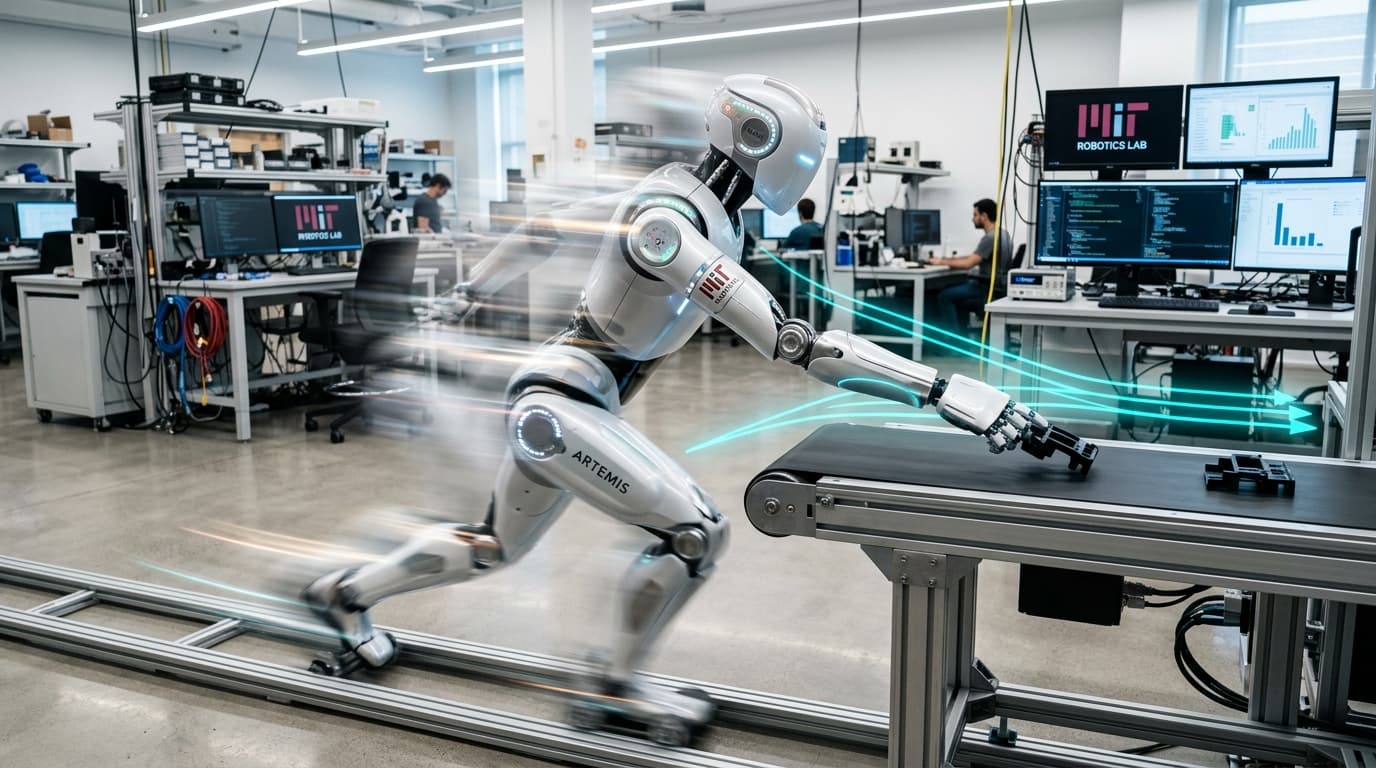
The MIT VLASH robot 2026 breakthrough lets machines predict their future positions, doubling speed in pick and place AI tasks. Here's why faster robots that think ahead are a game-changer.
I spend a lot of time tracking incremental improvements in robotics, but every once in a while, a paper drops that makes me stop everything. The MIT VLASH robot 2026 research is one of those moments. Researchers at MIT's Computer Science and Artificial Intelligence Laboratory (CSAIL) have developed a technique that fundamentally changes how robots plan and execute physical movements.
What is VLASH and Why is it Revolutionary?
VLASH stands for Vision-Language-Action with Speculative Horizon. In plain English, it means the robot doesn't just react to what it sees right now — it predicts where it will be in the future and pre-computes the actions needed to get there.
Traditional robotic systems operate on a simple loop: observe, plan, act. The problem is that each cycle takes time. By the time the robot finishes "thinking" about what to do, the world has moved on. A box on a conveyor belt is now three inches further down the line. The faster robots think ahead approach of VLASH breaks this bottleneck by running speculative planning in parallel with execution.
The results are staggering. Pick and place AI tasks — the bread and butter of warehouse and manufacturing robotics — saw speed improvements of over 100%. The robots literally doubled their throughput without any hardware changes. It's a pure software innovation.
From Lab to Factory Floor
The implications for logistics and manufacturing are enormous. Amazon, Tesla, and every major automotive manufacturer are pouring billions into robotic automation. A 2x speed improvement from a software update alone would translate to billions in operational savings.
If you're a robotics developer or researcher working on manipulation tasks, VLASH is built on top of standard vision-language models that you can experiment with today. For local development, I've been running simulation environments on the NVIDIA Jetson AGX Orin (around $1,999). It's the perfect edge compute platform for testing real-time robotic planning algorithms before deploying to physical hardware.
The robots aren't just getting smarter. They're getting faster. And VLASH proves that the biggest speed gains in robotics might come not from better motors, but from better thinking.
David tests AI tools, gadgets, and developer platforms hands-on before writing about them. His work focuses on making complex tech approachable — without the hype. He has covered 100+ products across AI, gadgets, and software for TechPixelly.