Open-Source AI Under Threat: Why Nvidia, Meta, and OpenAI Are Fighting US Regulation
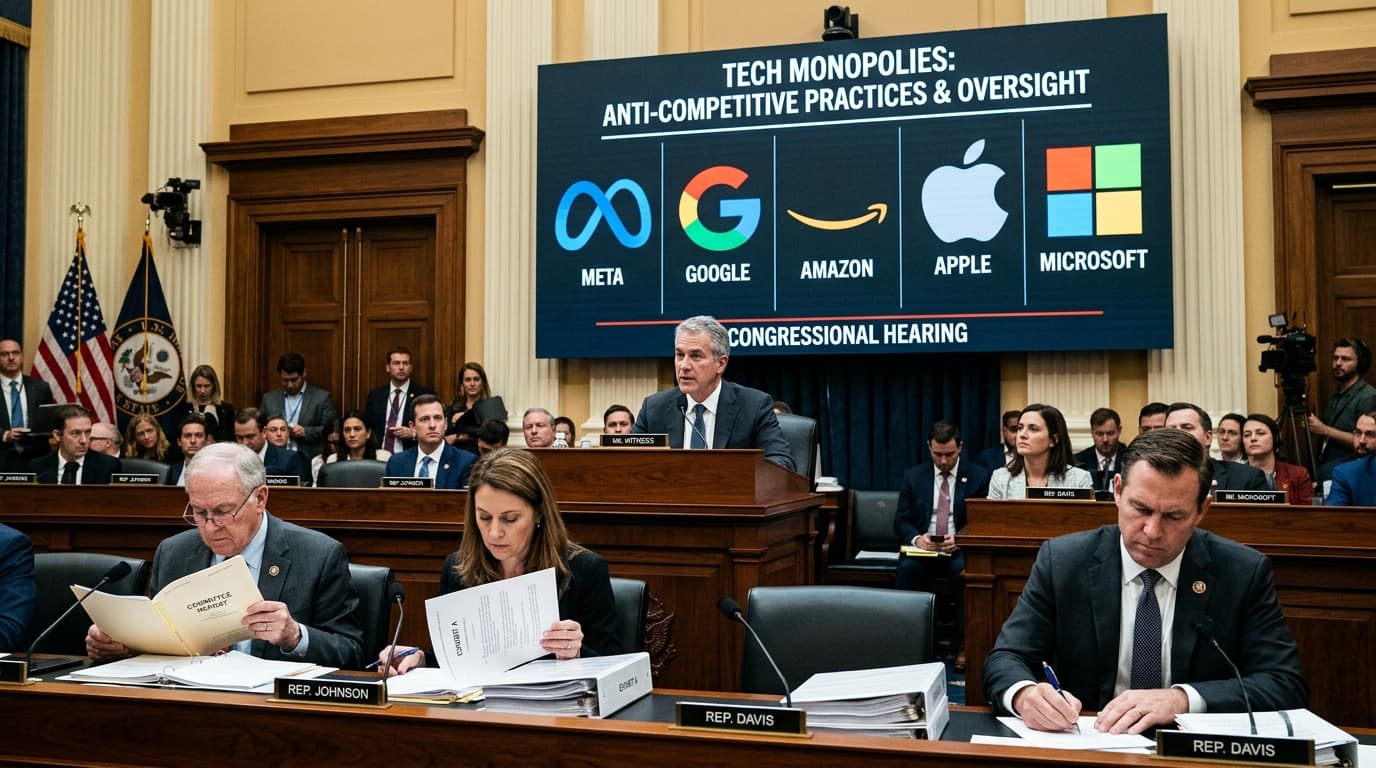
The open-source AI regulation 2026 battle is heating up. Nvidia, Meta, and OpenAI have united to urge US lawmakers to protect open-weight models from sweeping restrictions.
I never thought I'd see the day when Nvidia, Meta, and OpenAI would be on the exact same side of a policy fight. These companies compete fiercely on every front—hardware, models, cloud services. But the open-source AI regulation 2026 debate has created the rarest of alliances: Big Tech united against Washington.
The Regulatory Threat Explained
Several US lawmakers have been pushing proposals that would impose sweeping restrictions on the release of "open-weight" AI models. The concern, in theory, is that freely available powerful models could be used by adversaries for cyberattacks, disinformation, or weapons development.
But the joint letter from Nvidia Meta OpenAI US lawmakers pushes back hard. Their argument is straightforward: restricting open-source AI would devastate American innovation, hand a competitive advantage to China (which actively encourages open-source AI development), and cripple the startup ecosystem that relies on freely available foundation models to build products.
Why Developers Should Care
If you are a developer building on top of open-weight models like Llama, Mistral, or Falcon, this directly affects your livelihood. Heavy regulation could mean licensing requirements, mandatory government audits, or outright bans on distributing certain model weights.
The practical response is to get involved. The public comment period for several of these proposals is still open. Beyond advocacy, smart developers are hedging by ensuring they can run models entirely locally, independent of any potential future restrictions on cloud-hosted open models.
I've been stress-testing my local inference capabilities with increasingly large models. The Corsair One i500 workstation (starting at $3,799) has become my go-to for running 70B+ parameter models at acceptable speeds with its compact form factor and liquid cooling. If the regulatory landscape shifts, having a robust local AI setup won't just be convenient; it'll be essential.
Open-source AI built the modern AI revolution. Killing it would be like banning the printing press because some people print bad books.
David tests AI tools, gadgets, and developer platforms hands-on before writing about them. His work focuses on making complex tech approachable — without the hype. He has covered 100+ products across AI, gadgets, and software for TechPixelly.