Top Wearables for Tracking Match Stats like a Pro
TL;DR
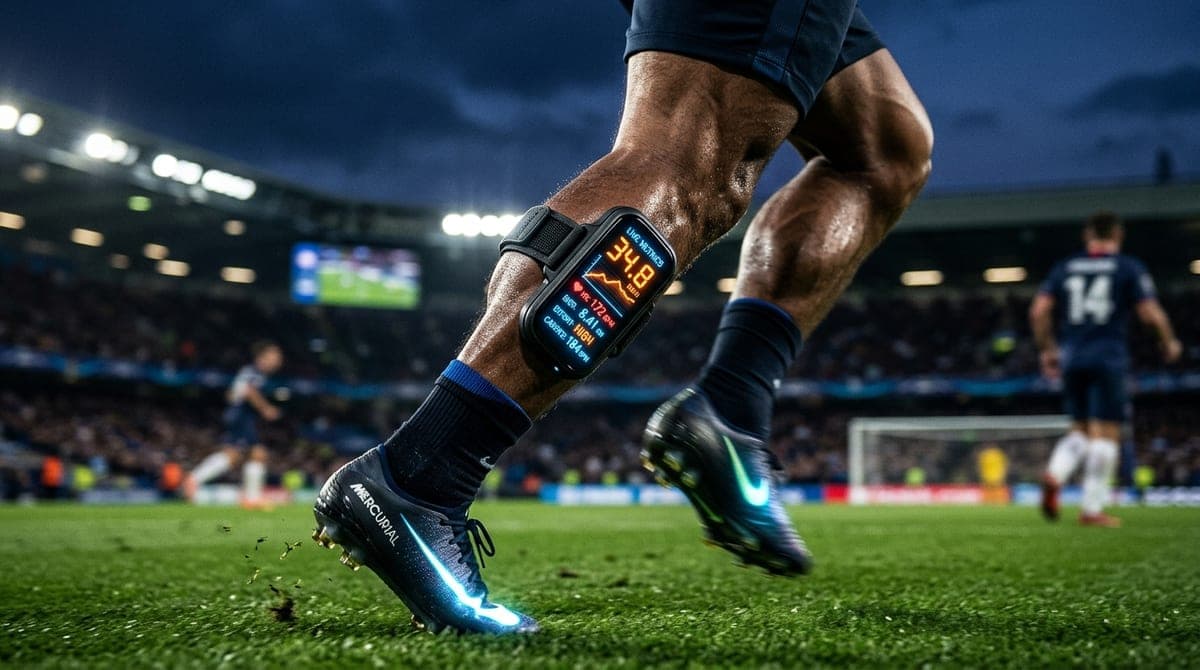
Football wearables have bridged the gap between amateur players and professionals. By tracking crucial metrics like total distance, top speed, accelerations, and positional heat maps, these devices provide actionable insights to improve your game. In this guide, we rank the best football trackers, including the STATSports APEX Athlete Series, Catapult One, and PlayerMaker, to help you find the perfect match for your budget and goals.
Why Wearables Are Changing the Beautiful Game
Gone are the days when sophisticated performance tracking was exclusively reserved for top-flight professionals in the Premier League or La Liga. Today, advancements in sports technology have made GPS trackers and smart sensors accessible to Sunday league warriors, academy prospects, and fitness enthusiasts alike.
If you've ever watched a professional match, you've likely noticed players wearing what looks like a sports bra under their jerseys. These are GPS tracking vests, and they house incredibly powerful pods that capture thousands of data points every second. By bringing this technology to the consumer market, players at all levels can now answer questions like: How fast did I really sprint? Did I cover more ground in the first or second half? Am I positioning myself correctly?
Tracking your stats isn't just about bragging rights in the dressing room (though that's certainly a perk). It's about data-driven development. By understanding your physical output, you can tailor your training, prevent injuries, and ultimately perform better on match day. If you're serious about your athletic development, combining a wearable with our comprehensive football fitness training guide can yield incredible results.
Key Metrics to Track: What Actually Matters?
Before diving into the devices themselves, it's essential to understand the data they collect. Not all metrics are created equal, and knowing what to look for will help you make an informed purchase.
1. Total Distance Covered
This is the most basic yet fundamental metric. It tells you exactly how much ground you've covered during a session or match. Midfielders typically cover the most distance, often exceeding 10km in a 90-minute game. Monitoring your distance helps ensure you're building the necessary stamina.
2. Top Speed and Sprints
Football is a game of explosive movements. While jogging builds a base, matches are often decided by high-speed sprints. Top wearables will measure your maximum velocity and count the number of sprints you make above a certain speed threshold.
3. Accelerations and Decelerations
Speed is great, but the ability to change pace rapidly is arguably more critical in football. Accelerations measure how quickly you reach your top speed, while decelerations track your ability to stop and change direction. High numbers of intense decelerations can lead to muscle fatigue, so tracking this helps with post-match recovery strategies.
4. Heat Maps and Positional Data
Where are you spending most of your time on the pitch? Heat maps visualize your movement, showing if you're holding your position, drifting out of wide areas, or tracking back effectively. This is invaluable for tactical analysis.
5. Heart Rate Zones
Many advanced trackers monitor your cardiovascular effort, breaking your session down into heart rate zones. This helps determine if you're training in the right energy systems (aerobic vs. anaerobic).
Top Wearable Trackers for Football Players
Now, let's explore the top devices on the market that can transform how you analyze your game.
1. STATSports APEX Athlete Series
STATSports is one of the most recognizable names in football technology, officially partnering with clubs like Arsenal, Liverpool, and Juventus. Their APEX Athlete Series brings that elite-level tracking to the masses.
The APEX pod slips into a comfortable, lightweight vest. It boasts a 10Hz GPS, meaning it calculates your position ten times per second, ensuring highly accurate speed and distance tracking. The accompanying app is arguably the best in the business, offering pro comparisons where you can benchmark your stats against players like Raheem Sterling or Harry Kane.
- ✓ Incredible accuracy; Pro player comparisons; Exceptional app interface
- ✗ Premium price point; Vest sizing runs slightly small
The APEX series also introduces a "Pro Rating" score out of 100, which fluctuates based on your performance, giving you a tangible number to improve week over week. If you're looking for the gold standard in consumer football tracking, this is it.
2. Catapult One
Catapult is the other giant in the professional sports tracking industry, and their Catapult One system is a direct competitor to STATSports. Formerly known as PLAYR, Catapult One offers a highly refined user experience designed specifically to help amateur players train like the pros.
The Catapult One pod also uses a 10Hz GPS and fits into a comfortable vest. What sets Catapult apart is its focus on training and development. The app provides not just raw data, but actionable advice and training plans designed by elite coaches to help you improve specific areas of your fitness.
- ✓ Built-in training programs; Excellent heat maps; Slightly more affordable entry price
- ✗ Requires a subscription for full features; Syncing can occasionally be slow
Keep in mind that Catapult One operates on a subscription model (often bundled with the initial purchase for the first year). This ongoing cost is something to consider, but the consistent app updates and premium coaching content make it a worthwhile investment for dedicated players.
3. PlayerMaker
If wearing a vest isn't your style, PlayerMaker offers a completely different approach. Instead of GPS tracking on your back, PlayerMaker uses smart sensors that strap directly onto your football boots.
Because the sensors are on your feet, PlayerMaker tracks technical and biomechanical metrics that GPS vests simply cannot. This includes the number of touches, time on the ball, left vs. right foot usage, kicking velocity, and release speed. It still tracks physical metrics like distance and sprints using advanced accelerometers and gyroscopes, though it lacks the GPS-driven heat maps of STATSports or Catapult.
- ✓ Tracks ball touches and footedness; No vest required; Great for technical development
- ✗ Straps can wear out; Lacks GPS heat mapping
For midfielders who want to know exactly how many passes they completed with their weaker foot, or strikers looking to improve their shot release time, PlayerMaker provides unparalleled technical insights. It pairs perfectly with practice sessions using smart footballs.
4. Garmin Forerunner 965
While not exclusively a football tracker, the Garmin Forerunner 965 deserves a spot on this list for players who want a device they can wear 24/7. Wearing a GPS watch during a competitive match is usually prohibited by referees for safety reasons, but for training sessions, 5-a-side games, and general fitness tracking, a premium smartwatch is incredibly versatile.
The Forerunner 965 offers multi-band GPS for pinpoint accuracy, advanced heart rate tracking, and an incredibly bright AMOLED display. You can use the "Cardio" or "Running" profiles to track your distance and sprints during a kickabout. Plus, it provides comprehensive recovery metrics, sleep tracking, and HRV status, giving you a holistic view of your athletic readiness.
- ✓ 24/7 health tracking; Phenomenal battery life; Multi-sport versatility
- ✗ Cannot be worn in official matches; Very expensive; Not football-specific
If you're an all-around athlete who plays football as part of a broader fitness routine involving running, cycling, or swimming, a high-end Garmin might be a better investment than a dedicated football vest.
5. Zepp Play Football
For players on a strict budget or parents looking for a simple entry-level tracker for youth players, the Zepp Play Football sensor is a viable option. Similar to PlayerMaker, it's a small sensor that inserts into a calf sleeve rather than strapping to the boot or wearing a vest.
It tracks basic metrics like distance, kicks, sprints, and maximum speed. Another neat feature is its integration with smartphone video; you can use the app to record a game, and the sensor will automatically tag highlights based on your movements (like a sudden sprint or a powerful kick).
- ✓ Very affordable; Video highlight integration; Unobtrusive calf sleeve design
- ✗ Less accurate than premium GPS; App hasn't been updated recently; Basic data
While it doesn't offer the granular detail or professional validation of STATSports or Catapult, it's a fun and inexpensive way to start engaging with your match stats.
How to Choose the Right Football Tracker
With several distinct form factors and pricing models available, choosing the right tracker comes down to identifying your primary goals as a player.
- For the Aspiring Pro: If your goal is maximizing physical performance and comparing yourself to elite standards, a GPS vest system like STATSports or Catapult One is the way to go. The heat maps and sprint data are essential for tactical and physical development.
- For the Technical Maestro: If you care more about your first touch, passing distribution, and weak-foot usage than your top speed, PlayerMaker offers insights that no other device can match.
- For the All-Around Athlete: If you want a device that tracks your sleep, recovery, daily steps, and running workouts alongside casual football sessions, a premium smartwatch like the Garmin Forerunner is the most versatile choice.
- For the Budget-Conscious: If you just want to know roughly how far you ran during your Sunday league match without breaking the bank, look into entry-level calf or boot sensors.
Integrating Data into Your Training Routine
Owning a wearable is only the first step; the real value comes from how you use the data. It's easy to get obsessed with hitting a new top speed every game, but true improvement requires a more nuanced approach.
1. Establish a Baseline: Don't change your playing style for the first few weeks. Just play your natural game and collect data. This establishes your baseline metrics—your average distance, typical sprint count, and standard heat map.
2. Identify Weaknesses: Once you have a baseline, look for areas of improvement. Are you fading in the last 20 minutes? Your total distance in the second half will show a sharp decline. Are you a winger who isn't making enough overlapping runs? Your sprint count will be lower than expected.
3. Set Targeted Goals: Use your weaknesses to set specific, measurable goals for your next session. If your second-half stamina is lacking, incorporate interval training into your mid-week routine. Check out our guide on building elite football stamina for specific drills.
4. Monitor Training Load and Recovery: More isn't always better. Tracking your "Player Load" (a metric combining distance, speed, and accelerations) helps prevent overtraining. If your load has been unusually high for three consecutive weeks, your data is telling you it's time for a lighter recovery week to prevent injury.
The Role of Wearables in Injury Prevention
One of the most overlooked benefits of football wearables is their role in keeping you on the pitch. Muscle strains—particularly hamstrings and calves—are rampant in football. These injuries often occur due to fatigue or sudden spikes in training intensity.
By monitoring your high-speed running volume and decelerations, you can spot the warning signs of fatigue before a tear happens. Professional clubs use this exact data to determine if a player needs to be subbed off or rested for a match. By taking ownership of your own data, you can apply the same sports science principles to your own body.
Final Verdict: Are Wearables Worth It?
In short, yes. If you are passionate about football and genuinely want to improve, a wearable tracker is one of the best investments you can make. It removes the guesswork from your development. Instead of feeling like you had a good game, you have the hard data to prove it—or the data to show exactly where you fell short.
For most competitive amateur players, the STATSports APEX offers the best balance of professional-grade accuracy and an intuitive app experience. However, any of the devices on this list will provide a massive upgrade over relying on intuition alone.
Embrace the data, train smarter, and watch your performances on the pitch reach new heights.
FAQs
Can I wear a GPS tracker during official matches? Yes, most official leagues—from Sunday leagues up to FIFA-sanctioned professional matches—allow GPS tracking vests. They are considered safe because the pod is padded beneath your jersey on your upper back. However, smartwatches and fitness bands worn on the wrist are strictly prohibited during competitive matches due to the risk of injuring yourself or another player.
Do I need an internet connection to use these trackers? No, the pods record data locally during the match. You only need a Bluetooth connection to your phone and an internet connection after the game to sync the data to the app and analyze your stats.
Are boot sensors like PlayerMaker as accurate as GPS vests? They measure different things. Boot sensors are actually more accurate for technical stats like touches and kicking speed. However, for total distance and positional heat mapping, a dedicated GPS vest on your upper back will generally provide more reliable geographical data than accelerometers on your feet.
How long do the batteries last? Most premium GPS pods, like STATSports and Catapult, offer roughly 6 to 8 hours of active tracking battery life. This is more than enough for several matches and training sessions before needing a recharge.
David tests AI tools, gadgets, and developer platforms hands-on before writing about them. His work focuses on making complex tech approachable — without the hype. He has covered 100+ products across AI, gadgets, and software for TechPixelly.