Google Fitbit Air Review: Is a Screenless, AI-Powered Fitness Band the Future?
Disclosure: Some of the links in this review are affiliate links. If you purchase through them, TechPixelly may earn a small commission at no extra cost to you. We purchased the Fitbit Air used in this review with our own funds.
When rumors started circulating earlier this year that Google was radically redesigning the Fitbit lineup, the wearable tech community was skeptical. The idea of a premium fitness tracker entirely abandoning the screen felt like a massive step backward. Why would anyone pay premium prices for a device that can't even tell you the time?
Having spent the last two weeks with the newly released Google Fitbit Air, I finally understand the vision. It is the most comfortable, accurate, and aggressively futuristic tracker I've ever worn. But it is also deeply polarizing.
Google isn't just selling you a heart-rate monitor anymore; they are selling you a highly opinionated on-device AI personal trainer. Let’s break down what makes the 12-gram Fitbit Air brilliant, and why long-time Fitbit fans might absolutely hate it.
The Hardware: Invisible Tech
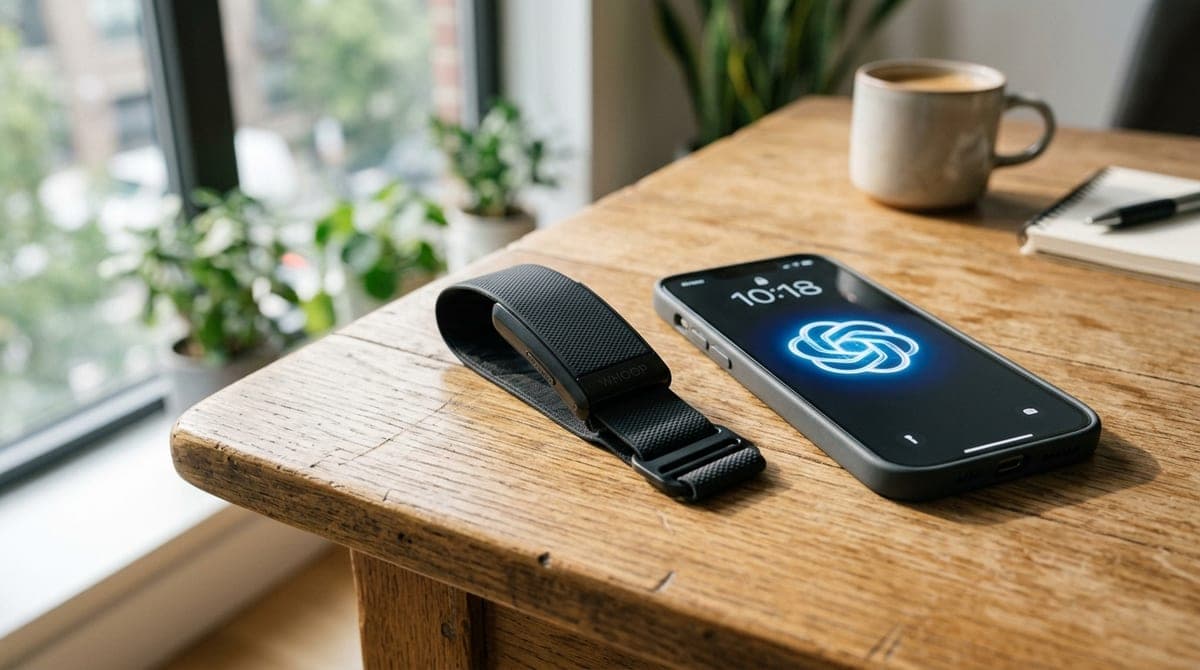
The first thing you notice about the Fitbit Air is nothing at all. Weighing in at an absurdly light 12 grams, the tracker is essentially a sleek, matte silicone band housing a sophisticated biometric sensor array. There are no buttons, no haptic crowns, and absolutely no OLED displays.

Because there is no screen draining the power, the battery life is phenomenal. I consistently squeezed out 7 to 8 days of 24/7 wear—including heavy workout sessions and sleep tracking—before needing to snap it onto the proprietary magnetic charger.
The sensor suite itself is a noticeable upgrade from previous generations. It leverages a new multi-path optical heart rate sensor that maintains accuracy even during high-intensity interval training (HIIT) when sweat and movement typically confuse budget trackers.
The Software: Meet Your New AI Overlord
If the hardware is an exercise in minimalism, the software is an exercise in maximalist data crunching.
Without a screen to glance at, all your interactions are routed through the Fitbit app. But the app has fundamentally changed. Instead of presenting you with static graphs and a sterile "10,000 step" goal, the home screen is dominated by the AI Coach.
Powered by a localized, miniaturized Gemini model, the AI Coach doesn't just record your data; it interprets it.
Dynamic Coaching in Action
Last Tuesday, I slept poorly—logging only about 4.5 hours of deeply fragmented rest. When I opened the app the next morning, the AI Coach had preemptively canceled my scheduled 5K run. Instead, it presented a conversational prompt:
"Your HRV (Heart Rate Variability) is severely depressed this morning, and your sleep architecture indicates poor recovery. I've adjusted today's goal to a 20-minute active recovery yoga session. Pushing for a run today increases injury risk by 34%."
It is hard to overstate how different this feels from the old Fitbit paradigm. The system is prescriptive, not just descriptive. It factors in your historical performance, current stress metrics, and even local weather data to dynamically generate your daily routine. If you connect it to your favorite wireless earbuds, the AI Coach will even pipe real-time form corrections and pacing adjustments directly into your ears during a workout.
The Controversy: Where Did the Community Go?
Here is where the Fitbit Air becomes highly controversial. In their pivot toward personalized AI, Google has aggressively gutted the traditional Fitbit community features.
The social feed, the step challenges with friends, the leaderboards—most of these features have either been buried deep in the settings or removed entirely. Google’s thesis seems to be that users will achieve better health outcomes by listening to an omniscient, hyper-personalized AI rather than trying to beat their cousin's weekend step count.
For users who relied on that social pressure to get off the couch, the Fitbit Air feels incredibly isolating. It is just you and the algorithm.
The Verdict
The Google Fitbit Air is a bold, uncompromising piece of technology. By stripping away the screen, Google has forced users to stop obsessing over real-time stats and instead focus on holistic, AI-guided recovery and performance.
If you want a smartwatch to read text messages or prefer the gamification of beating your friends in a step challenge, this is absolutely not the device for you. But if you want an invisible, highly accurate biometric tracker that acts like an elite sports scientist living in your phone, the Fitbit Air is a revolutionary step forward.
It isn't just tracking your life; it's actively trying to manage it. Whether or not you find that comforting or dystopian will entirely dictate if you should buy one.
Priya has been stress-testing consumer electronics for three years — dropping, dunking, and daily-driving everything from earbuds to AR headsets. She brings an engineer's eye and an everyday user's perspective to every review.