Mastering Prompt Engineering for 2026

I’ll be honest with you: three years ago, I thought I was a "prompt engineer" because I knew how to add "think step-by-step" to the end of my ChatGPT requests and could format my outputs into a nice Markdown table.
I was wrong.
Last month, I sat down to audit the AI workflows for a mid-sized SaaS company. They were bleeding $15,000 a month on API costs, their latency was atrocious, and their customer support bots were hallucinating policies that didn't exist. When I finally got access to their backend and looked at their system prompts, my jaw dropped. They were still using the exact same generic, bloated "mega-prompts" that Twitter influencers were peddling back in 2023. They had literal paragraphs begging the AI to "be a good helpful assistant" mixed in with complex JSON schemas and ten different, conflicting tone guidelines.
The reality in 2026 is vastly different. The models have gotten exponentially smarter, context windows have expanded to ridiculous sizes, and latency has dropped. Yet, the way most people talk to these models hasn't evolved at all. If you are still relying on massive, monolithic paragraphs of instructions and hoping for the best, you are leaving an absurd amount of value on the table.
In my experience, the shift from 2024 to 2026 hasn't been about finding "magic words" or secret jailbreaks. It’s about systemic context design, constraint engineering, and understanding the probabilistic nature of the underlying architecture. Today, I’m going to break down exactly how I engineer prompts for production systems, personal productivity, and content generation in 2026. No fluff, no generic templates—just the raw, battle-tested frameworks I use every single day.
The Death of the "Mega-Prompt"
Remember when the ultimate flex on LinkedIn was sharing a 4,000-word prompt that claimed to turn an LLM into a senior copywriter, web developer, data analyst, and life coach all at once?
Those days are officially dead.
When I tested monolithic prompts against the latest frontier models—specifically Claude 3.5 Sonnet, GPT-4.5, and Gemini 2 Pro—the results were consistently underwhelming. Why? Because of attention degradation. Even with multi-million-token context windows, models still suffer from attention dilution when presented with too many competing constraints.
When you pack too many conflicting instructions, tone guidelines, formatting rules, and edge cases into a single prompt, the model starts to average them out. It tries to please all the constraints simultaneously, and the result is a bland, robotic output that sounds like every other AI-generated article on the internet. It becomes a master of none.
Instead, the modern approach is Multi-Agent Orchestration.
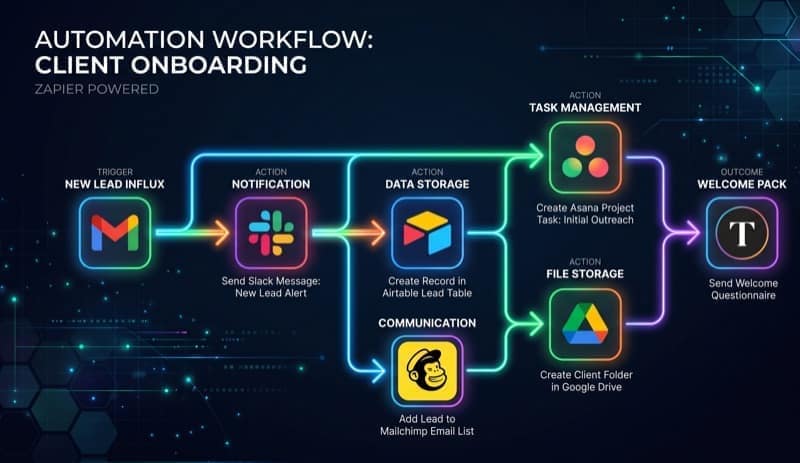
Rather than asking one model to do five things poorly, I now build workflows that use highly specialized, laser-focused prompts sequentially.
- The Researcher: A prompt designed purely for information extraction. It has zero instructions about tone or formatting. Its only job is to return hard facts and quotes from the provided context.
- The Synthesizer: A prompt that takes the raw research and structures a logical outline. It focuses entirely on narrative flow and information architecture.
- The Writer: A prompt that takes the outline and focuses entirely on brand voice, pacing, and vocabulary constraints.
- The Editor: A prompt that ruthlessly cuts adjectives, eliminates passive voice, and checks for structural compliance.
This modular approach is the secret sauce behind the most successful workflows we discuss in our guide to AI tools. It is cheaper, faster, and infinitely easier to debug. If the tone is wrong, I don't have to rewrite a 4,000-word beast and pray it doesn't break the JSON output; I just tweak the "Writer" prompt.
Context Engineering > Prompt Engineering
If I had to summarize my entire philosophy for 2026 in one sentence, it would be this: Stop trying to program the model with instructions, and start grounding the model with context.
Let me give you a real-world example. I was recently trying to get an LLM to write a highly technical teardown of a new JavaScript framework.
My initial, instruction-heavy prompt looked like this: "Write a technical blog post about the new React compiler. Make sure to sound authoritative. Use a witty, engaging tone. Include complex code snippets. Mention specific performance metrics. Don't use the word 'delve'. Be concise but thorough."
The output? Absolute garbage. It sounded exactly like an AI trying to sound like a human. It used fake metrics, the code snippets were generic "Hello World" examples, and the "witty tone" manifested as cringeworthy puns about JavaScript fatigue.
My new, context-heavy prompt looked like this: "You are an expert frontend developer writing for an audience of senior engineers. Attached are three blog posts I previously wrote (for voice matching) and the official documentation of the new compiler along with the pull request notes (for technical accuracy). Write a teardown of the memoization system based ONLY on the provided docs, matching the exact pacing, sentence length variation, and formatting of my previous posts. Do not invent any metrics not explicitly stated in the docs."
The difference was night and day.
By providing explicit, high-quality reference material, I bypassed the model's innate bias toward its training data's "AI-speak" baseline. In 2026, your prompts are only as good as your RAG (Retrieval-Augmented Generation) pipeline. If you aren't using tools that allow you to seamlessly inject semantic search results, API data, or dynamic context into your prompts, you are fundamentally behind the curve.
The "Chain-of-Verification" Technique
One of the most frustrating things about working with LLMs is their unshakeable confidence when they are completely, provably wrong. Hallucinations haven't disappeared in 2026; they've just gotten more subtle, insidious, and harder to catch at a glance.
To combat this, I rely heavily on a technique called "Chain-of-Verification" (CoVe). This is a prompting strategy where you force the model to independently fact-check its own output before finalizing the response. You don't just ask for an answer; you ask for a verifiable audit trail.
Here is how I structure it in production environments:
- Drafting: The model generates the initial response based on the prompt and context.
- Interrogation: (In a new API call or a strict sequential step) The model generates a bulleted list of every single verifiable claim, metric, or factual statement made in the draft.
- Verification: The model checks each claim against its provided context window (or via a connected web search tool). It must cite the exact paragraph or source url for each claim.
- Revision: The model rewrites the draft, actively removing, hedging, or correcting any claims that failed the verification step.
You might think this takes too long, but with the massive decrease in token generation latency we've seen this year, a 4-step CoVe prompt executes faster than a single zero-shot prompt did in 2023. This is especially critical if you are publishing content in YMYL (Your Money or Your Life) niches, dealing with enterprise data, or writing code that will actually be deployed.
The Tools That Actually Matter in 2026
You can't master prompt engineering in a vacuum, and you certainly can't do it if you are constantly fighting against a restrictive, consumer-grade UI. The ecosystem has exploded, and relying strictly on the native web interfaces of ChatGPT or Claude is a massive bottleneck for power users.
I test dozens of AI wrappers, prompt management platforms, and developer playgrounds every month. Most of them are thinly veiled API calls with a pretty UI and a subscription fee. However, there are a few tools that fundamentally change how I interact with LLMs, allowing for rapid iteration, variable testing, and multi-model comparisons.
If you are serious about managing multiple personas, testing prompts systematically, and keeping your API costs under control, you need a dedicated client.
- ✓ Bring your own API keys
- ✓ incredible local history search
- ✓ extensive prompt library
- ✓ and flawless multi-model support.
- ✗ Requires you to manage your own API billing (though this is almost always cheaper in the long run than a $20/mo subscription).
Using a tool like TypingMind allows me to decouple my prompts from any single vendor. If OpenAI has an outage, or if Anthropic releases a better model tomorrow, I just flip a switch. My system prompts, my custom personas, and my context libraries remain perfectly intact. I am never locked into one ecosystem.
The "E-E-A-T" Prompting Framework
If you are generating content for the web, you already know about Google's E-E-A-T guidelines (Experience, Expertise, Authoritativeness, and Trustworthiness). But how do you actually engineer a prompt that satisfies these requirements in a world where Google's algorithms are increasingly hostile to generic AI spam?
Most people just tell the AI to "sound authoritative and expert." That doesn't work. The AI interprets "authoritative" as "use big words, write in the passive voice, and generate incredibly dense, boring paragraphs."
Here is my personal framework for injecting real E-E-A-T into AI outputs through constraint engineering:
1. Mandate First-Hand Experience (The "E")
I explicitly forbid the AI from making sweeping, generic generalizations. Instead, I force it to adopt a specific, grounded perspective. Prompt Snippet: "Frame this analysis strictly through the lens of a senior DevOps engineer who has personally migrated a legacy monolithic application to this specific microservices architecture. Focus heavily on the unexpected pain points, undocumented errors, and real-world friction that only someone who has actually done this would know."
2. Force Specificity over Vocabulary (The "E")
Expertise is demonstrated through extreme specificity, not through a thesaurus. Prompt Snippet: "Do not use generic, unquantifiable benefits like 'saves time' or 'improves efficiency.' Instead, quantify the impact using realistic, hypothetical metrics (e.g., 'reduced CI/CD pipeline execution from 45 minutes to 12 minutes' or 'dropped cloud compute costs by 22%')."
3. Acknowledge Trade-offs (The "A" & "T")
Nothing destroys trust faster than an overly positive, sycophantic review. True authorities understand that every tool, framework, or strategy has drawbacks. If you only talk about the pros, you sound like a marketer, not an expert. Prompt Snippet: "Dedicate at least 30% of this review to the strict limitations, edge-case failures, and architectural drawbacks of the product. Clearly define the exact user persona who should absolutely NOT use this tool."
By systematically weaving these constraints into your system prompts, you force the LLM out of its comfortable, sycophantic baseline and into a much more rigorous, engaging, and trustworthy posture.
Stop Writing Like a Robot: Cadence Engineering
Let's address the elephant in the room: AI writing style.
We all know the tells. Words like delve, testament, tapestry, landscape, robust, crucial, and moreover. Sentences that always start with a gerund. Paragraphs that all have exactly three sentences of the exact same length. The overly tidy, symmetrical structure that feels like it was extruded from a plastic mold.
In my experience, you cannot fix this by simply telling the AI "don't use the word delve." (It will just substitute it with "explore" and keep the exact same boring, monotonous sentence structure). You can't just provide a blacklist of words and expect human-like prose.
Instead, you have to engineer the cadence.
Here is the exact prompt constraint I append to my final editing pass when generating content:
"Vary your sentence length drastically. Write a five-word sentence. Then write a longer, flowing sentence that explains a complex idea in plain English. Then hit the reader with a short, punchy declarative statement. Emulate the conversational but rigorous style of a seasoned tech journalist. Never use transitional clichés like 'Furthermore,' 'In conclusion,' or 'Ultimately.' Start paragraphs directly with the main point, not a meandering wind-up."
When you pair this strict cadence engineering with the multi-agent orchestration I mentioned earlier, the results are staggering. You get content that actually breathes. It has rhythm. It sounds like a human being wrote it, because you mathematically constrained the AI to mimic the pacing of human thought.
The Future: Prompting the Prompt Engineers
As we look toward the rest of the year, the meta is shifting yet again. We are rapidly entering the era of meta-prompting—where we use LLMs to generate, test, and refine our prompts autonomously.
Frameworks like DSPy are already turning prompt engineering from an intuitive art into a programmatic, deterministic science. We are moving away from manually tweaking adjectives in a text box, crossing our fingers, and hoping for a better output. Instead, we are moving toward defining rigorous evaluation metrics, compiling golden datasets, and letting the optimizer find the mathematically perfect prompt for our specific use case.
If you want to stay ahead of the curve, keep a very close eye on these algorithmic developments. (I highly recommend checking out our breakdown of the latest tech trends for a much deeper dive into programmatic prompting and agentic workflows).
But until DSPy and automated prompt optimization become accessible (and affordable) to the average creator and small business, mastering the fundamentals is non-negotiable. Context injection, Chain-of-Verification, and cadence engineering are your best defenses against the flood of mediocrity that is currently choking the internet.
The models will undoubtedly keep getting smarter, faster, and cheaper. But they still need a director. They need someone to provide the rich context, set the intellectual stakes, and demand specificity. In 2026, prompt engineering isn't about knowing a secret list of magic words. It's about having the clearest possible vision of what you want to achieve, and the structural discipline to force the model to execute it flawlessly.
Now, stop reading, open up your LLM client of choice, and go build a multi-agent workflow that actually works. You've got this.
Swayam tests AI tools, gadgets, and developer platforms hands-on before writing about them. His work focuses on making complex tech approachable — without the hype. He has covered over 75 products across AI, gadgets, and software for TechPixelly.