Adidas Trionda Review: Inside the Sensor Tech of the 2026 World Cup's Smart Football
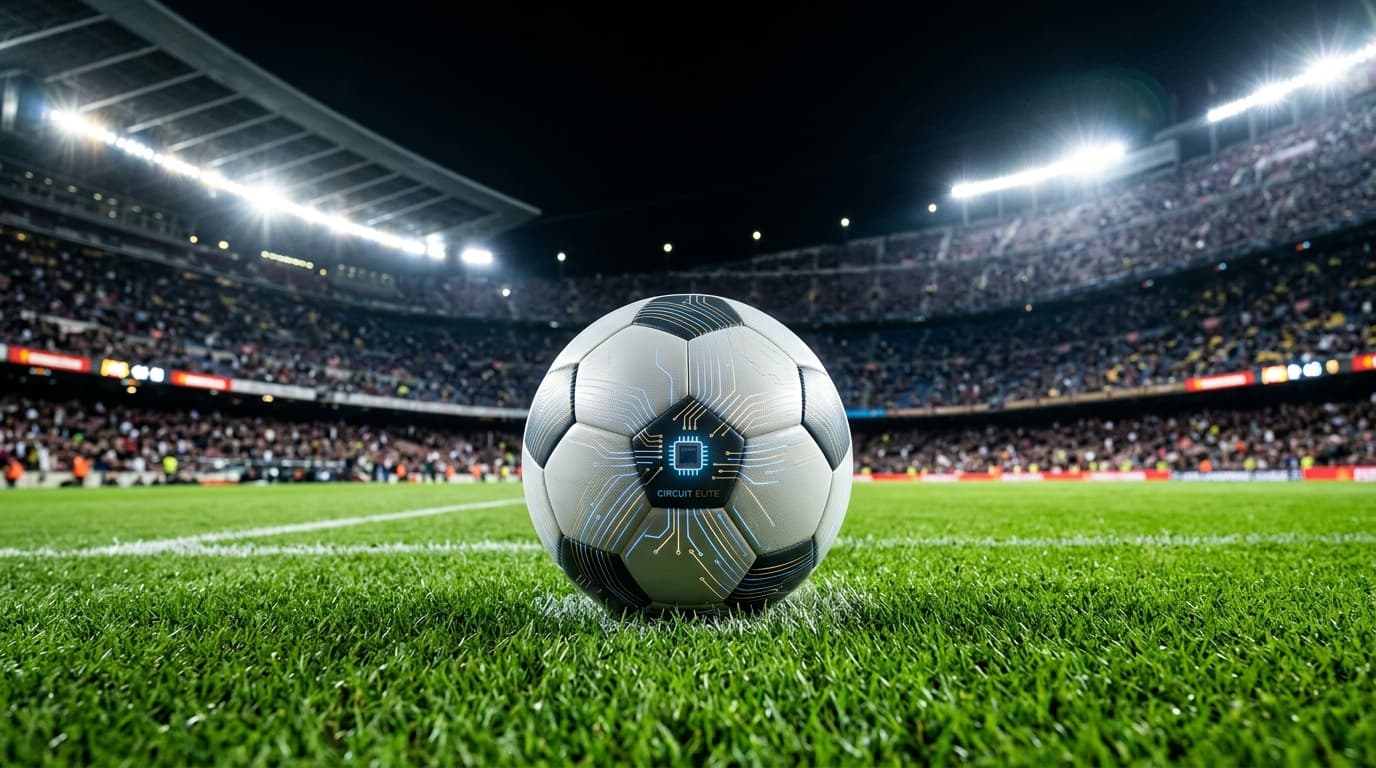
The 2026 FIFA World Cup is well underway across North America, and while the athletes on the pitch are providing the spectacle, the real MVP might just be the ball they are kicking.
Meet the Adidas Trionda, the official match ball of the 2026 tournament. While it looks like a beautifully designed piece of sports equipment with its distinctive diamond-inspired aerodynamic paneling, the Trionda is actually one of the most advanced wearable gadgets in the world.
Here is a deep dive into the technology hiding inside the world's smartest football.
The "Diamond" in the Center: The 500Hz IMU Sensor
The secret to the Trionda's intelligence is suspended perfectly in its exact center. Adidas has integrated a 500Hz inertial measurement unit (IMU) sensor into the ball's core.
What does 500Hz mean? It means the sensor is transmitting data back to the stadium's server 500 times per second.
This sensor tracks everything:
- Exact Contact Points: The exact millisecond a player's boot makes contact with the ball.
- Acceleration and Velocity: How fast the ball is traveling and its exact trajectory.
- Spin Rate: The exact RPM of the ball as it curls into the top corner.
AI-Assisted Officiating: The End of Controversies?
The primary purpose of this massive data collection isn't just for cool TV graphics; it's to power FIFA's semi-automated offside technology and VAR (Video Assistant Referee) systems.
When a tight offside call occurs, the IMU sensor provides the absolute truth on exactly when the ball was kicked. This data is combined with 12 dedicated tracking cameras positioned under the stadium roof that track the ball and 29 data points on each individual player.
The result? The AI system can automatically generate a 3D animation perfectly illustrating the offside line within seconds, drastically reducing the agonizingly long VAR delays we saw in previous tournaments.
"Football AI Pro" and The Democratization of Data
Alongside the Trionda, FIFA launched "Football AI Pro" in partnership with Lenovo for the 2026 tournament. This system takes the raw data streaming from the ball and the optical cameras and provides advanced, real-time analytics to all 48 participating teams.
Historically, only the wealthiest football associations could afford elite data science departments. By providing the Trionda's raw telemetry data to everyone via a unified AI platform, FIFA is attempting to level the playing field, allowing smaller nations to make data-driven tactical adjustments mid-game.
How Does it Feel to Play With?
You might think a ball with a computer chip suspended inside it would feel heavy or imbalanced. Remarkably, it doesn't.
Adidas utilizes a highly specialized suspension system that anchors the sensor without affecting the ball's weight distribution or aerodynamics. Professional players have widely reported that the Trionda feels incredibly responsive, with the textured polyurethane outer skin providing excellent grip in both dry and wet conditions across the varying climates of the North American host cities.
The Verdict
The Adidas Trionda represents the absolute pinnacle of sports technology. It proves that the most impactful gadgets aren't always screens and smartwatches; sometimes, they are the quiet, invisible systems that make the beautiful game even better.
Alex spent four years as a security engineer before moving into tech journalism. He covers enterprise AI, cloud infrastructure, post-quantum cryptography, and the business implications of emerging technology — with the depth that comes from having built these systems himself.