Total Solar Eclipse August 12 2026: First European Totality in 27 Years
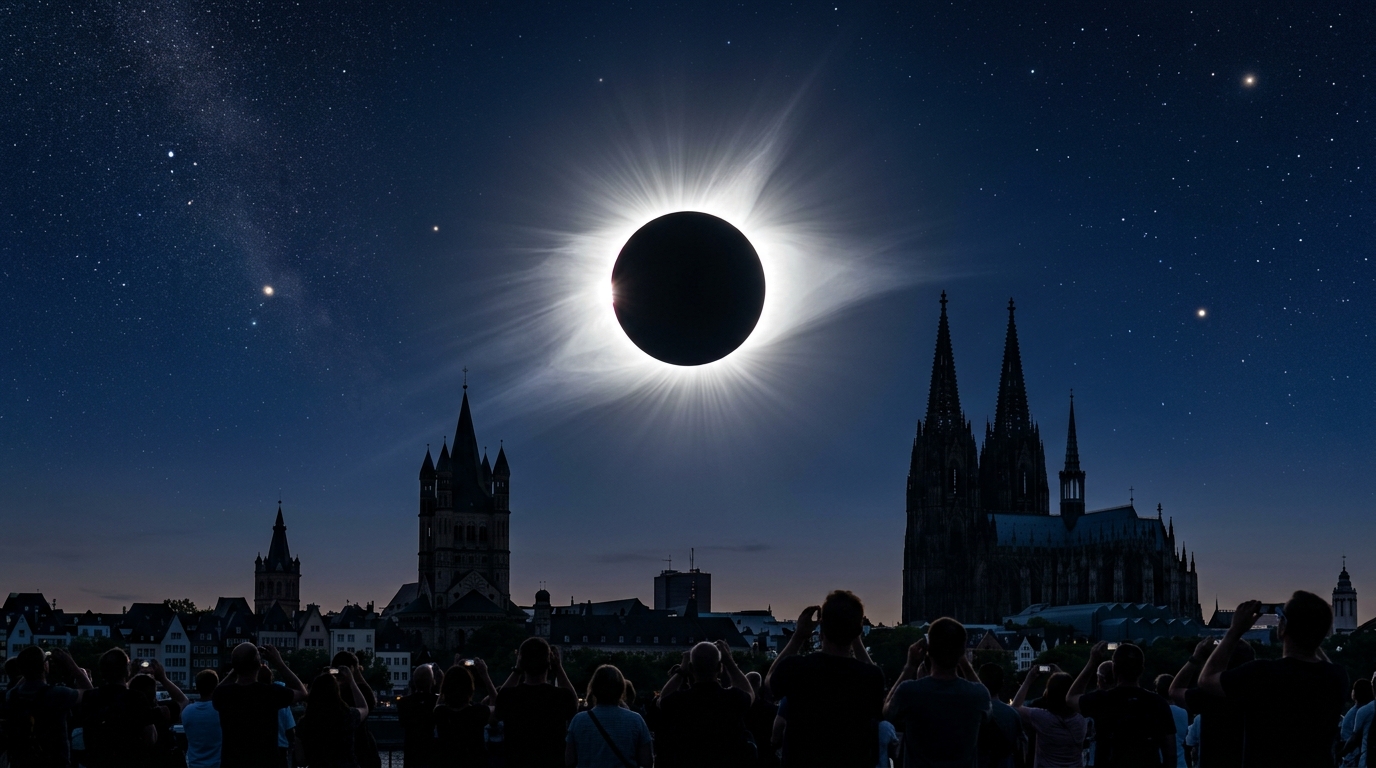
The total solar eclipse on August 12, 2026 will bring totality to Spain, Iceland, and Greenland — the first time mainland Europe has experienced a full solar eclipse since 1999. Here's where and how to watch.
Tomorrow marks one of the most anticipated astronomical events of the decade. On August 12, 2026, a total solar eclipse will sweep across the North Atlantic, bringing totality to parts of Greenland, Iceland, northern Spain, and portions of Russia — the first time mainland Europe has witnessed a full solar eclipse in 27 years, since the legendary August 11, 1999 event.
Path of Totality: Where the Sun Goes Dark
The moon's shadow will first touch Earth over the Arctic, racing southeast across Greenland and Iceland before crossing the Atlantic and making landfall in northern Spain. Cities along the path of totality include:
- Reykjavík, Iceland — 2 minutes 18 seconds of totality (approximately 18:30 UTC)
- Oviedo, Spain — 1 minute 48 seconds of totality (approximately 19:30 UTC)
- Bilbao, Spain — 1 minute 35 seconds of totality
- Valencia, Spain — partial eclipse (85% coverage)
NASA, ESA, and the Spanish Royal Observatory will provide live streams, but nothing compares to witnessing totality in person. Hotels in northern Spain have been sold out for months, and eclipse tourism is estimated to inject over €500 million into the Spanish economy.
How to Watch Safely
Never look directly at the sun without certified ISO 12312-2 solar eclipse glasses. Regular sunglasses — even very dark ones — do not provide adequate protection. During the brief window of totality (when the sun is 100% covered), and only then, it is safe to view with the naked eye.
For those outside the path of totality, a partial solar eclipse will be visible across most of Europe, North Africa, and the eastern coast of North America. NASA's official live stream begins at 17:00 UTC on August 12.
Why This Eclipse Matters
Beyond the spectacle, total solar eclipses provide invaluable scientific opportunities. Researchers will study the sun's corona, measure gravitational lensing effects, and test new satellite instruments during the brief minutes of totality. The 2026 eclipse also serves as a rehearsal for the August 2, 2027 total solar eclipse, which will cross North Africa and the Middle East with significantly longer totality durations.
David tests AI tools, gadgets, and developer platforms hands-on before writing about them. His work focuses on making complex tech approachable — without the hype. He has covered 100+ products across AI, gadgets, and software for TechPixelly.