Mission Aagaman: India's Private Space Sector Reaches Orbit with Vikram-1
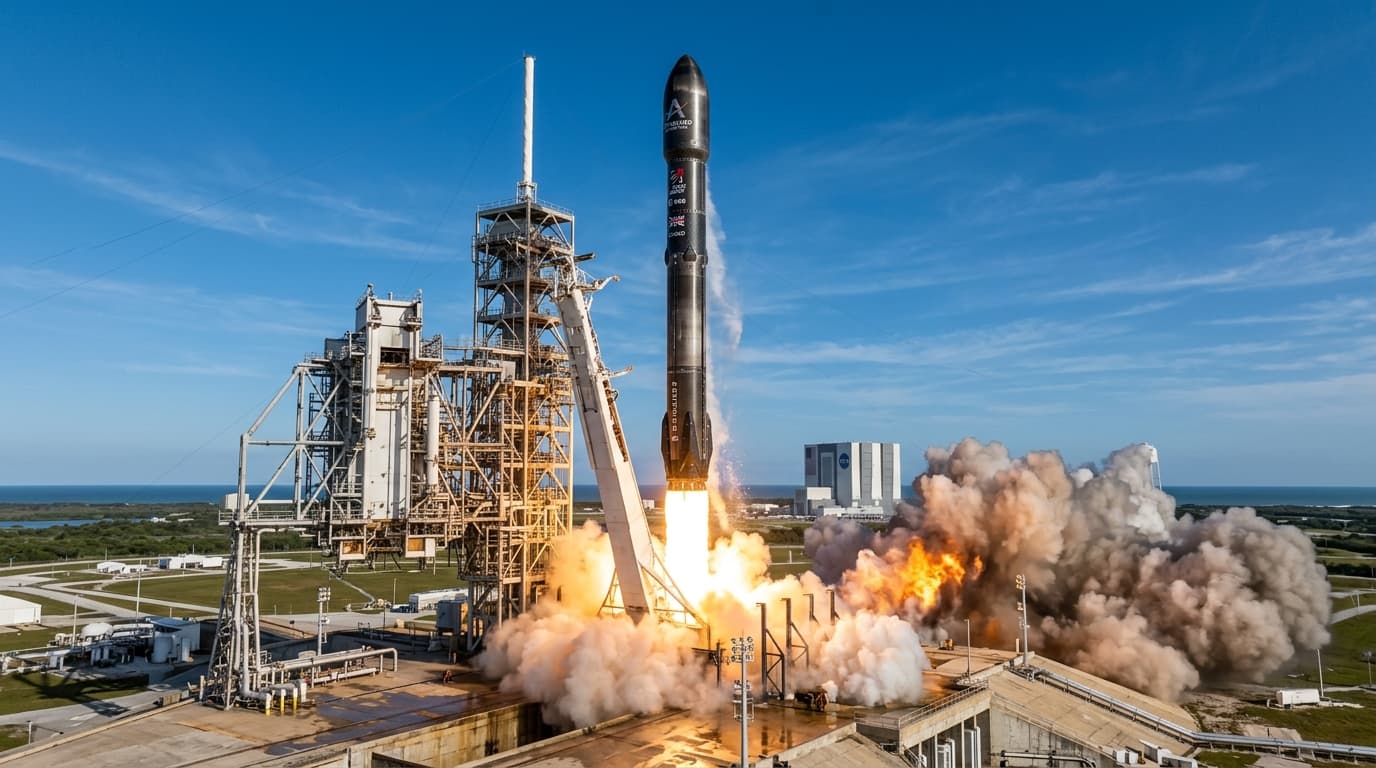
Skyroot Aerospace has successfully launched Vikram-1 into Low Earth Orbit, marking a historic milestone for India's booming private commercial space ecosystem.
The global space race is no longer dominated solely by government agencies and a few massive Western conglomerates.
On July 18, 2026, the Indian startup Skyroot Aerospace made history with the successful launch of its Vikram-1 rocket from the Satish Dhawan Space Centre. Titled "Mission Aagaman" (Arrival), the launch successfully placed a payload into Low Earth Orbit (LEO), officially cementing India as the third country in the world to demonstrate orbital launch capability through a private enterprise.
1. A Historic Milestone for Indian SpaceTech
While the Indian Space Research Organisation (ISRO) has long been a global powerhouse, Mission Aagaman proves that India's private sector is ready to capture a massive share of the commercial space economy.
Vikram-1 is a three-stage, 22-meter tall orbital launch vehicle built entirely by Skyroot. Its successful deployment of customer payloads into a 450 km orbit validates years of intense research and development, proving the viability of India's indigenous private space infrastructure.
2. Advanced Engineering: Carbon Composites and 3D Printing
What makes Vikram-1 stand out in the crowded global launch market is its highly optimized, cost-effective engineering.
The rocket features an all-carbon composite structure, significantly reducing its weight while maintaining the structural integrity required to survive the immense aerodynamic pressures of launch. Furthermore, Skyroot has heavily utilized 3D-printed liquid engines for its orbital adjustment modules, reducing manufacturing time and increasing the vehicle's overall reliability.
3. The "Cab Service" to Low Earth Orbit
Vikram-1 is designed to be the ultimate "cab service" for small satellites. Capable of carrying payloads up to 350 kg to LEO, the rocket is tailored for the booming small satellite and constellation market.
During Mission Aagaman, the rocket didn't just validate its propulsion systems; it carried several commercial and experimental payloads, including technology demonstrators and a lab-grown diamond, showcasing its flexibility for diverse customer needs.
The Next Frontier
The successful orbital flight of Vikram-1 is a watershed moment. It signals to the global market that India is not just a destination for cost-effective engineering, but a premier hub for cutting-edge, commercial end-to-end space launch services. The era of private Indian spaceflight has officially arrived.
David tests AI tools, gadgets, and developer platforms hands-on before writing about them. His work focuses on making complex tech approachable — without the hype. He has covered 100+ products across AI, gadgets, and software for TechPixelly.