AI Sovereignty & Regional Stacks: The Fracturing of Global AI
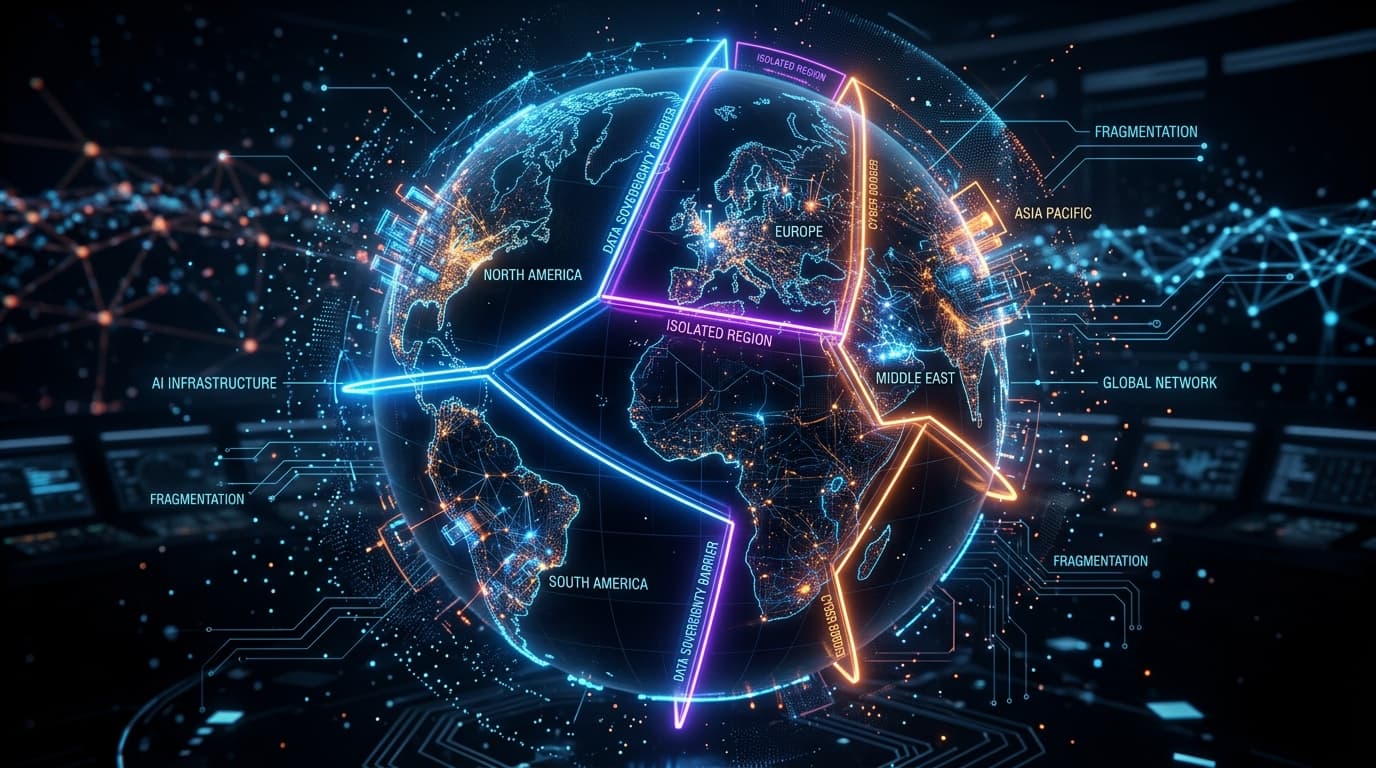
The vision of a single, unified global AI ecosystem is dead. In late 2026, tech sovereignty and data localization are driving the rise of regional AI stacks.
For years, the technology industry operated under the assumption that a handful of massive, centralized AI models would serve the entire globe. By late 2026, geopolitical realities and strict data governance laws have completely fractured that ecosystem.
We have officially entered the era of AI Sovereignty. Nations, regional blocs, and large enterprises are no longer willing to rely on foreign infrastructure for their core intelligence layer.
1. The Rise of Regional Stacks
The AI landscape is bifurcating into distinct regional technology stacks. For example, Western companies operating internationally are increasingly adopting localized models (such as Alibaba's Qwen or Baidu's Ernie) to ensure compliance within the Chinese market.
This isn't just happening in China. The European Union's stringent AI Act and data localization mandates are forcing companies to build entirely separate, EU-hosted AI infrastructure to process data without it ever crossing the Atlantic.
2. Sovereign Silicon and Data Control
AI sovereignty isn't just about software; it's heavily tied to hardware. The dependency on a single nation for advanced silicon has prompted massive investments in "sovereign silicon." Countries are racing to build their own semiconductor fabrication plants and design specialized chips.
Furthermore, "Private by Design" architecture is now mandatory in sectors like healthcare, finance, and defense. Enterprises require the ability to run powerful, fine-tuned models entirely on-premises or within localized Virtual Private Clouds (VPCs) to ensure their proprietary data is never ingested by a public model.
3. The End of the Monolith
The fragmentation of AI means that developers can no longer build a single application and expect it to run globally on one API.
Modern software architecture must now be model-agnostic and regionally aware. Applications must seamlessly switch between a US-hosted model, an EU-compliant model, and a Chinese-hosted model depending on where the user is located and what data is being processed.
Adapting to a Fractured World
The unified global internet is a thing of the past. To succeed in 2026, tech companies must embrace AI sovereignty and architect their systems to thrive in a decentralized, regionally regulated world.
David tests AI tools, gadgets, and developer platforms hands-on before writing about them. His work focuses on making complex tech approachable — without the hype. He has covered 100+ products across AI, gadgets, and software for TechPixelly.