The $3 Trillion 'Intelligence Supercycle': How Sovereign Silicon is Reshaping AI
The AI arms race has moved from software to hardware. Learn why Sovereign Silicon and massive infrastructure investments are driving the next tech supercycle.
I recently visited a stealth startup that wasn't building another AI chatbot. Instead, they were designing custom cooling solutions for server racks. The founder told me, "The software war is over. The hardware war just started."
Welcome to the Intelligence Supercycle. By 2026, the tech industry isn't just focused on fine-tuning models; it is pouring an estimated $3 trillion into data centers, energy infrastructure, and "Sovereign Silicon." If you are an enterprise trying to scale AI, your biggest bottleneck isn't the algorithm—it's the compute. Here is why the infrastructure layer is the most important tech trend of the decade.
1. The Rise of Sovereign Silicon
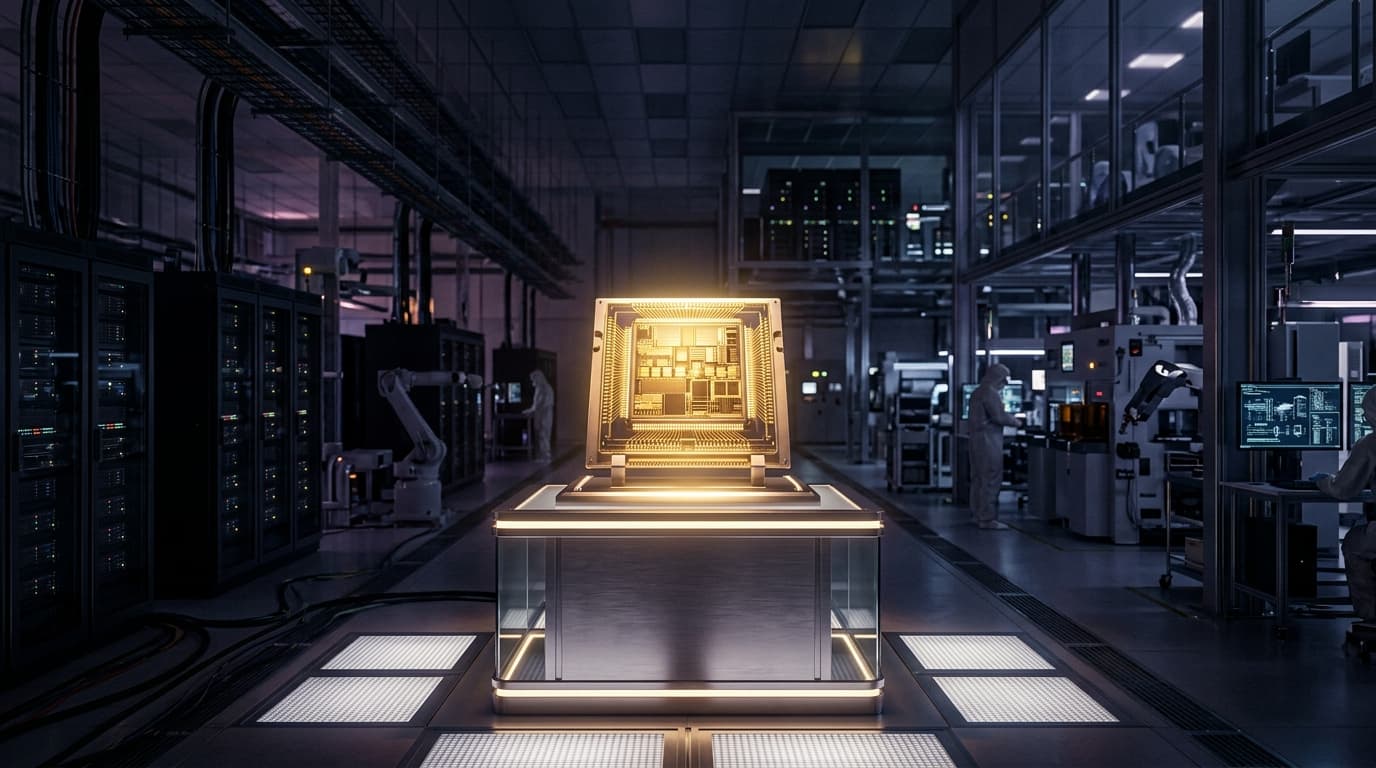
Relying on a single vendor for GPUs is no longer a viable corporate strategy. We are seeing a massive shift toward Sovereign Silicon—custom chips designed in-house by tech giants (like Apple's M-series scaling to server farms) and nation-states to secure their own AI supply chains.
- The Impact: This diversification breaks up the monopoly on compute. For businesses, this eventually means lower inference costs and more localized, secure processing.
2. Energy is the New Currency
You cannot run a 100-megawatt data center on good intentions. The Intelligence Supercycle is forcing a reckoning with energy grids.
We are seeing a surge in investments toward small modular reactors (SMRs) and dedicated renewable grids located right next to data centers. If you are building AI applications, your cloud provider's energy efficiency will directly dictate your unit economics.
3. The Move to Edge Compute
Because massive cloud compute is expensive and power-hungry, the pendulum is swinging back to the edge. High-performance inference is moving directly onto consumer devices. Apple Intelligence was just the beginning; now, local LLMs are becoming the standard for privacy-first, low-latency tasks.
The Hardware Reality
The companies that win the next decade won't be the ones with the best prompt engineering. They will be the ones that master the hardware and infrastructure required to run those prompts at a global scale. The Intelligence Supercycle is here.
David tests AI tools, gadgets, and developer platforms hands-on before writing about them. His work focuses on making complex tech approachable — without the hype. He has covered 100+ products across AI, gadgets, and software for TechPixelly.