Humanoid Robot Shipments Quadruple in H1 2026: AgiBot & Unitree Lead Factory Revolution
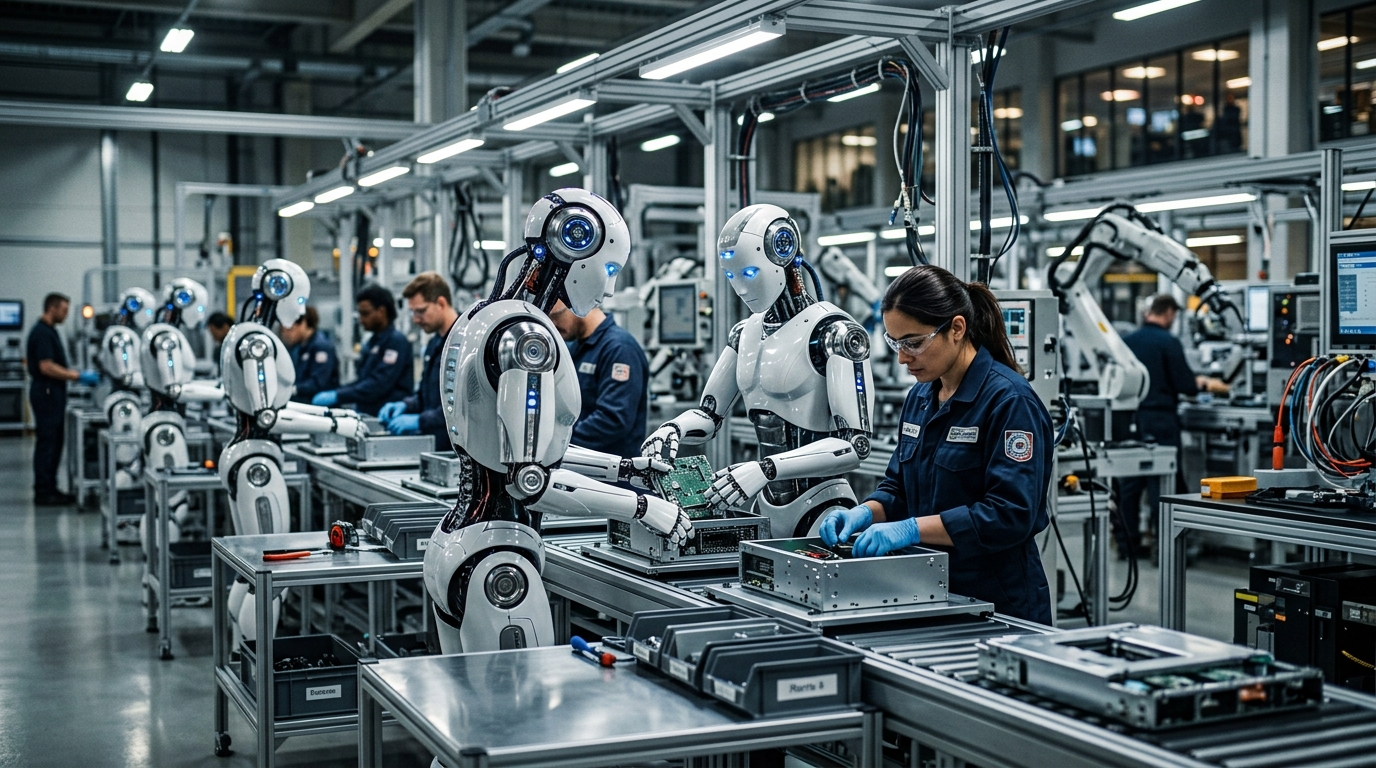
Global humanoid robot shipments nearly quadrupled in the first half of 2026, with Chinese firms AgiBot and Unitree dominating as industrial deployments now account for over 70% of the market.
The humanoid robot market just went from sci-fi prototype to factory floor reality. A new Forbes report reveals that global humanoid robot shipments nearly quadrupled in the first half of 2026, with industrial and commercial deployments now accounting for over 70% of total shipments — up from less than 30% just 18 months ago.
Who's Leading the Humanoid Robot Race
Two Chinese companies have emerged as clear market leaders:
AgiBot
AgiBot's Galbot G1 has become the best-selling humanoid robot for warehouse and logistics applications. Standing 5'7" with 42 degrees of freedom, the G1 can pick, pack, and palletize at speeds approaching human workers while operating 20-hour shifts without breaks. AgiBot shipped over 12,000 units in H1 2026, primarily to Chinese e-commerce fulfillment centers and automotive assembly plants.
Unitree
Unitree's H1 humanoid has carved out dominance in inspection and maintenance roles. Deployed across oil refineries, power plants, and data centers, the H1 uses LiDAR-guided navigation and dexterous manipulation to perform tasks in environments too dangerous or remote for human workers. Unitree's H1 pricing — starting at $90,000 per unit — has made it the most cost-competitive humanoid on the market.
The Shift from Demo to Deployment
What changed in 2026? Three factors converged:
- AI foundation models improved robot decision-making, allowing humanoids to handle unstructured tasks without pre-programmed routines
- Battery technology (solid-state cells from CATL and BYD) extended operational runtime to 18-20 hours
- Labor economics — rising wages and workforce shortages in manufacturing made the ROI case undeniable
Tesla's Optimus, Boston Dynamics' Atlas, and Figure AI's Figure 02 remain strong Western competitors, but Chinese manufacturers currently hold an estimated 65% global market share by unit volume.
What's Next
Industry analysts project that by 2028, over 500,000 humanoid robots will be deployed globally in industrial settings. The next battleground? Service-sector humanoids for healthcare, hospitality, and elder care — markets where human-like form factors provide significant advantages over traditional industrial robots.
David tests AI tools, gadgets, and developer platforms hands-on before writing about them. His work focuses on making complex tech approachable — without the hype. He has covered 100+ products across AI, gadgets, and software for TechPixelly.