Volla Plinius Review: The Privacy-First Smartphone
A few weeks ago, I caught myself staring at my smartphone and realizing something fundamentally terrifying: this little slab of glass knows more about me than my closest friends. It knows where I sleep, what I buy, how fast I drive, and exactly how long I linger on a video of a vintage watch before scrolling past. I was complaining about a niche brand of coffee to a friend at a cafe, and three hours later, an ad for that exact roaster popped up on my Instagram feed. We’ve all been there, and we've all collectively shrugged, accepting this dystopian reality as the "cost of admission" for modern convenience.
But what if you didn't have to accept it?
That question led me down a rabbit hole of privacy-focused devices, eventually landing the Volla Plinius on my desk. For the past month, I’ve locked my flagship smartphone in a drawer and used the Plinius as my sole daily driver. I wanted to see if a truly de-Googled, privacy-first smartphone could survive the demands of my daily workflow as a tech journalist without making me want to pull my hair out.
Spoiler alert: It completely changed how I interact with technology, but it wasn't without some serious growing pains.
The Problem with "Big Tech" Phones
Before we dive into the hardware, we need to talk about why phones like the Volla Plinius even exist. When you buy a modern device from the major tech behemoths, you aren't really the customer—you're the product. Data brokers collect millions of data points a day to build an incredibly accurate profile of your habits, which is then sold to advertisers. The open-source community has been fighting back for years with custom ROMs like LineageOS or GrapheneOS, but flashing a custom ROM onto a standard phone is a daunting task that involves unlocked bootloaders, fastboot commands, and the risk of turning a $1,000 phone into a paperweight. (If you're interested in the software side of things, check out our guide to open-source software).
Volla, a German company that has been steadily building a cult following in the privacy space, aims to bridge this gap. Their pitch with the Plinius is simple: a beautifully designed, capable smartphone that comes pre-loaded with an operating system that respects your fundamental right to digital privacy right out of the box. No flashing required. No terminal commands. Just turn it on and take back your data.
Hardware and Design: Not Your Average Privacy Brick
Historically, buying a "secure" or "privacy-focused" phone meant carrying around a device that looked like a ruggedized brick from 2012, favored mostly by paranoid executives or cybersecurity researchers. The Plinius shatters this stereotype entirely.
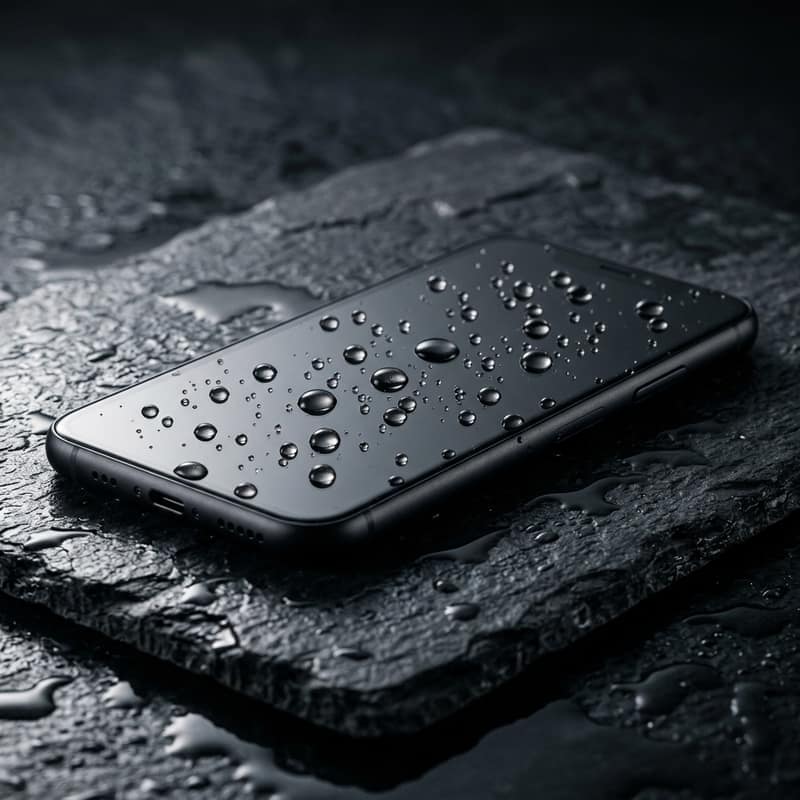
When I first unboxed it, I was struck by its minimalist, industrial design. It features a matte glass back that aggressively repels fingerprints, framed by a sturdy aerospace-grade aluminum chassis. At 195 grams, it feels substantial in the hand but not overly heavy. The 6.5-inch OLED display is surprisingly vibrant, offering a 120Hz refresh rate that makes scrolling through articles and feeds buttery smooth. The bezels are slim, and the tactile feedback from the physical buttons is delightfully clicky.
Under the hood, Volla has opted for a mid-range MediaTek Dimensity processor paired with 8GB of RAM and 256GB of expandable storage. It’s not going to win any synthetic benchmark wars against a Snapdragon 8 Gen 3, but for the tasks this phone is designed for, it's more than adequate. You won't be playing graphically intense 3D games at 60fps, but multitasking, document editing, and web browsing happen without a single stutter.
- ✓ Zero tracking out of the box; Beautiful minimalist hardware; Incredible battery life; Open-source OS options; Expandable storage
- ✗ Camera struggles in low light; Steep learning curve for non-techies; No built-in Google services; Average processing power
Audio, Connectivity, and the Return of the Headphone Jack
In a world where massive tech companies bravely removed the headphone jack nearly a decade ago, forcing an entire industry to adopt expensive, battery-dependent Bluetooth earbuds, Volla has made a defiant choice: the Plinius retains the 3.5mm headphone jack. As an audiophile who still relies on high-impedance wired in-ear monitors (IEMs), this was a massive win. The internal Digital-to-Analog Converter is surprisingly robust, driving my studio headphones with a clarity that rivaled dedicated portable audio players.
Connectivity-wise, the Plinius supports global 5G bands, Wi-Fi 6, and Bluetooth 5.2. Call quality—which is ironically often overlooked in modern smartphone reviews—is pristine. The earpiece speaker is loud, and the dual noise-canceling microphones ensured that my voice cut through urban traffic noise during important client calls. It’s also worth noting the dual-SIM capability, allowing you to run a physical SIM alongside an eSIM, making it an excellent companion for international travel or separating work from personal life.
The Operating System: The Heart of the Experience
The true magic—and the biggest hurdle—of the Volla Plinius lies in its software. When you purchase the device, you have the option to ship it with either Volla OS (an Android Open Source Project fork stripped of all Google dependencies) or Ubuntu Touch (a pure Linux mobile experience). I opted for Volla OS for this review, as it offers a more pragmatic middle ground for users transitioning from a standard smartphone ecosystem.
Living without Google Mobile Services (GMS) is undeniably hard at first. If you rely heavily on Google Maps, Uber, or apps that require Google's proprietary push notification services, you are going to hit some immediate roadblocks. I had to replace my usual suite of apps with open-source alternatives via F-Droid (the premiere open-source app repository). I swapped Google Maps for Magic Earth, Chrome for the privacy-hardened Bromite browser, and WhatsApp for Signal.
For the mainstream apps I absolutely needed that weren't on F-Droid, I used the Aurora Store (an anonymous client for the Google Play Store). While most apps worked flawlessly via the microG compatibility layer, a few strict banking apps simply refused to run because they failed Google's SafetyNet checks. This is the ultimate trade-off. You are trading seamless, frictionless convenience for absolute sovereignty over your personal data. If you want to dive deeper into how alternative ecosystems are challenging monopolies, you might enjoy reading our latest tech trends coverage on the decentralized web.
The Philosophy of the Springboard UI
The Springboard launcher deserves its own dedicated deep dive because it represents a complete reimagining of mobile interaction. Volla calls it an "intelligent text field." When you unlock the phone, you aren't greeted by pages of colorful icons practically begging to be tapped. You are greeted by a muted, elegant wallpaper and a single blinking cursor.
This UX choice is rooted in cognitive psychology. Icons are visual triggers. When you see the bright red dot of a notification on your email app, your brain receives a micro-dose of dopamine, compelling you to open it even if you originally intended to do something else. The Springboard removes these triggers entirely. If you want to check your email, you type "email." If you want to read the news, you type "news."
Furthermore, the Springboard features 'Collections'—smart clusters of recent contacts, messages, and notes accessible via a quick swipe. It took me about three days to rewire my muscle memory, but once I did, my screen time plummeted by nearly 40%. I stopped doomscrolling because the phone stopped serving me visual bait. This intentional friction is arguably the most powerful 'feature' of the Volla Plinius. It doesn't just protect your data; it protects your attention span.
Camera Performance: The Unavoidable Compromise
Let's address the elephant in the room. If you are coming from a device that utilizes advanced computational photography, you have been spoiled. Tech giants use massive AI models to process images, turning mediocre sensor data into stunning, HDR-rich photos.
Because the Volla Plinius doesn't send your data to massive server farms and lacks the proprietary AI software of the tech giants, the camera experience is distinctly traditional.
The rear setup features a 50MP primary sensor and an 8MP ultrawide. In broad daylight, the photos are crisp, color-accurate, and totally usable for social media, capturing memories, or scanning documents. The dynamic range is surprisingly decent in well-lit environments. However, as soon as the sun goes down, the Plinius struggles. Without advanced night mode algorithms, low-light shots are noisy and prone to motion blur.
Is it a dealbreaker? For me, no. I'm willing to sacrifice a bit of low-light performance for the absolute peace of mind that my photos aren't being scanned for metadata, run through facial recognition algorithms, and cataloged by a trillion-dollar corporation. But if mobile photography and capturing perfect night-outs are your primary use cases for a smartphone, you need to manage your expectations accordingly.
Battery Life: The Unexpected Benefit of De-Googling
Here is a fascinating truth that nobody tells you about privacy phones: when your device isn't constantly pinging dozens of servers in the background to report your location, app usage, and search habits, your battery life skyrockets.
The Plinius packs a 4500mAh battery, which is a fairly standard capacity in today's market. However, the extreme efficiency of Volla OS meant that I routinely ended heavy workdays with over 45% battery remaining. On weekends, when my screen time naturally dropped, I easily squeezed two full days out of a single charge without engaging any battery-saver modes.
This was a revelation. It made me realize just how much processing power and battery life on conventional smartphones is wasted simply on telemetry and background data harvesting. It’s incredibly liberating to not have to carry a power bank or constantly scan the room for a wall outlet when you're out and about.
Security Features That Actually Matter
Volla hasn't just removed the bad stuff; they’ve added tangible, user-facing security features that power users will absolutely love. The device comes with a robust built-in VPN that operates at the system level, and a brilliant "Strict Mode." With a single toggle, Strict Mode can instantly block all background connections, disable the microphone and camera hardware at the kernel level, and sandbox your active applications. It is essentially a digital panic button.
Furthermore, Volla provides regular, transparent security updates without forcing you to accept convoluted new terms of service every three months. The bootloader is unlocked out of the box, meaning if you decide you don't like Volla OS, you are completely free to flash LineageOS, GrapheneOS, or any other compatible ROM. True ownership of the hardware is a rare commodity these days, and Volla respects that ownership.
The Verdict: Who Should Buy the Volla Plinius?
After a month with the Volla Plinius, returning to a mainstream smartphone felt deeply uncomfortable. I suddenly noticed every prompt asking for cross-app tracking, every hyper-targeted ad tailored to my recent offline conversations, and the chaotic, attention-grabbing nature of a standard colorful app grid.
The Plinius is definitely not for everyone. If you want a phone that acts as a frictionless conduit to endless social media feeds, offers seamless smart home integration with proprietary ecosystems, and takes flawless photos in pitch-black rooms, you will be frustrated by this device. The learning curve is real, and the occasional app incompatibility requires a level of patience that the average consumer simply might not have.
But if you are exhausted by the surveillance economy—if you view your digital data as a fundamental human right rather than a currency to be traded for minor conveniences—the Volla Plinius is an absolute breath of fresh air. It is a beautifully crafted piece of hardware running an operating system that fundamentally respects you as a user, not as a product.
Priced around $549, it sits comfortably in the mid-range market, but it offers something no flagship can buy: genuine peace of mind. For those ready to take the red pill and step outside the walled gardens, the Volla Plinius is currently the best vehicle for the journey.
I think I'll keep my old phone in the drawer for a while longer.
Have you considered switching to a privacy-focused phone to escape data harvesting? Let me know your thoughts in the comments below, or explore more of our hardware insights in our gadgets category.
Priya has been stress-testing consumer electronics for three years — dropping, dunking, and daily-driving everything from earbuds to AR headsets. She brings an engineer's eye and an everyday user's perspective to every review.