Sustainable AI Data Centers
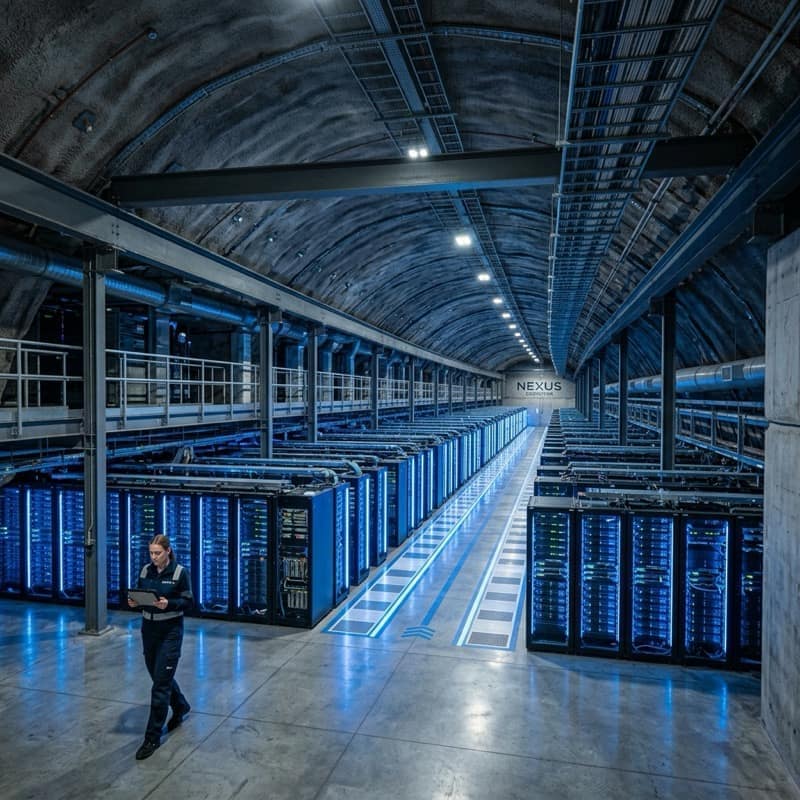
I remember standing outside a massive, non-descript warehouse in Northern Virginia last winter. You couldn't see the servers from where I stood, but you could feel them. The low hum vibrating through the soles of my shoes, the massive cooling towers spewing steam into the frigid air like artificial geysers. I was visiting a newly commissioned AI data center, and the sheer scale of energy consumption was terrifying.
We talk a lot about the magic of generative AI—how it writes code, creates art, and optimizes workflows. But we rarely talk about what it costs to pull that rabbit out of the hat. A single ChatGPT query uses roughly 10 times the electricity of a standard Google search. As someone who writes about latest tech trends for a living, I've watched this power consumption skyrocket from a niche concern to a literal existential threat to our local power grids.
So, how do we fix it? Over the past six months, I've interviewed facility managers, hardware engineers, and grid operators across three continents. The consensus? The current model is fundamentally broken. However, a new wave of sustainable AI data centers is finally emerging, promising a way to scale our computational needs without accelerating climate change. Here is my inside look at the technologies, the economics, and the radical shifts in strategy driving the race to green the AI revolution.
The Thermal Realities of the AI Boom
Let’s get real about the hardware for a second. Standard CPU servers run warm, but GPUs—the lifeblood of AI training and inference—run hot. When I spoke with a thermal engineering lead at a major hyperscaler in Silicon Valley, she pointed out that a modern NVIDIA H100 or Blackwell GPU cluster doesn't just need a breeze of cool air; it needs aggressive, active liquid cooling to physically stop the silicon from melting itself under full load.
This transition from air cooling to liquid cooling is the first major shift I've noticed in the field. Traditional data centers use massive CRAC (Computer Room Air Conditioning) units to push chilled air across server racks. It’s an incredibly inefficient brute-force method, akin to cooling a house by leaving the refrigerator door open. The new sustainable facilities are abandoning this entirely. Instead, they are utilizing direct-to-chip liquid cooling or even full-immersion cooling.
It sounds like sci-fi, but I watched a demonstration in a Texas facility where a dense compute rack, humming with millions of dollars of AI hardware, was dropped directly into a bath of synthetic fluid. The dielectric fluid boils at a remarkably low temperature, capturing the heat from the chips and carrying it away through a closed-loop system without a single fan spinning. The PUE (Power Usage Effectiveness)—the golden metric of data center efficiency where 1.0 is perfect—drops dramatically from a typical 1.5 down to 1.05 when you eliminate the massive air handlers.
Location, Location, Power Grid: The Hunt for Stranded Energy
Historically, data centers were built near fiber optic backbones and major population centers—hubs like Frankfurt, London, Amsterdam, and the aforementioned Northern Virginia. This made sense when latency was the most critical metric for web traffic and high-frequency trading. But sustainable AI data centers are following a completely different map. They are chasing what the industry calls "stranded" renewable energy.
I recently tracked a massive migration of new AI workloads shifting toward the Nordic countries, the Pacific Northwest, and even remote parts of Iceland. Why? Cheap, abundant, and zero-carbon hydro and geothermal power. If you’re training a massive Large Language Model (LLM) that takes three months and tens of thousands of GPUs to complete, it fundamentally doesn't matter if there's a 40-millisecond network latency delay to the engineers monitoring it. Training is largely location-agnostic.
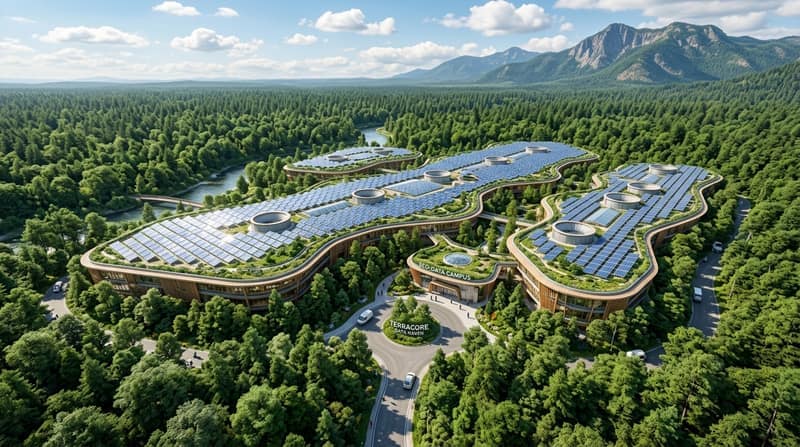
By building facilities right next to renewable energy sources—sometimes physically connected to solar farms or wind turbines before the power even hits the public utility grid—companies can avoid transmission losses and guarantee 100% green energy. I interviewed a startup CEO who deliberately placed his new AI cluster next to a stranded hydroelectric dam in Quebec. His electricity costs are a fraction of what they would be in California, and his carbon footprint is effectively zero.
If you're building an AI stack and looking for software and hosting providers that actually care about where their compute comes from, I highly recommend checking out our guide to AI tools for some eco-conscious recommendations.
Reimagining the Hardware Lifecycle and E-Waste
Sustainability isn't just about the electricity going into the wall. It’s equally about the massive e-waste footprint of the hardware itself. When I toured a hardware recycling facility outside of Reno, Nevada, the sheer volume of decommissioned servers stacked to the ceiling was staggering.
The shift toward sustainable AI data centers includes a massive push for circular hardware economies. In the past, companies would shred three-year-old servers to ensure data security and because upgrading was too complex. Now, hyperscalers are designing their chassis for modular upgrades. You swap out the GPU accelerator but keep the rack, the power supply, the networking gear, and the cooling infrastructure.
Furthermore, some innovative operators are finding secondary markets for "obsolete" AI hardware. A GPU that isn't fast enough to train the next iteration of GPT might be perfectly adequate for a university research lab, a regional hospital running local diagnostic inference tasks, or a small business analyzing customer data. This cascading reuse model extends the lifespan of heavily resource-intensive silicon from three years to nearly a decade.
- ✓ 100% renewable energy guarantees
- ✓ excellent GPU availability for inference
- ✓ transparent carbon reporting dashboards.
- ✗ Slightly higher network latency in certain regions; fewer API integrations compared to legacy giants like AWS or Azure.
The "Heat Reuse" Revolution: From Parasite to Partner
This is arguably my favorite trend in the sustainable data center space. What if the massive amount of thermal energy generated by AI workloads wasn't just a waste product to be vented into the sky, but a valuable, sellable commodity?
During a trip to Denmark, I saw this exact concept in action. A mid-sized data center there doesn't vent its heat into the atmosphere. Instead, it captures that thermal energy via heat exchangers and pumps it directly into the local district heating network. The heat generated by running AI algorithms is literally keeping thousands of local homes, schools, and swimming pools warm during the freezing Scandinavian winter.
We are seeing this concept slowly gain traction in North America as well. I spoke with a developer planning a facility in the Midwest who envisions a future where a data center is co-located with a massive industrial greenhouse. Using the server heat, they plan to grow tomatoes and leafy greens year-round in a climate that typically freezes solid in November. It’s a paradigm shift that transforms the data center from an energy parasite into a symbiotic, contributing part of the local infrastructure.
The Software Side of Sustainability: Green Coding
We can't just hardware our way out of this problem. Software optimization is the unsung hero of sustainable AI.
In my own testing of various machine learning deployments, I've noticed that poorly optimized code can keep GPUs running at 100% utilization for hours longer than necessary. We are currently seeing a massive push toward "green coding" practices within the developer community. This isn't just a buzzword; it’s a necessary discipline.
Green coding involves using more efficient algorithms, meticulously optimizing data pipelines to reduce idle time, and utilizing smaller, highly specialized models instead of massive, monolithic LLMs for simple tasks. Why use a 1-trillion-parameter model to categorize emails when an optimized 7-billion-parameter model can do it just as well, using 1% of the energy?
I highly recommend reading our deep dive into software development best practices if you want to understand how efficient coding directly translates to lower carbon emissions. The developers who can write high-performance, low-power code are going to be the most sought-after engineers of the next decade.
Nuclear Options: Small Modular Reactors
I can't write an article about AI energy consumption without touching on the elephant in the room: nuclear power. The sheer power density required by next-generation gigawatt data centers is pushing the industry toward a controversial but potentially necessary solution.
Major tech giants are actively investing in Small Modular Reactors (SMRs). Unlike massive, traditional nuclear power plants that take decades and billions of dollars to build, SMRs are designed to be built in factories and assembled on-site. The idea is to literally co-locate a small, safe, next-generation nuclear reactor directly on the campus of an AI data center.
When I asked a grid infrastructure expert about this, his take was blunt: "Solar and wind are fantastic, but they are intermittent. AI training runs 24/7 at 100% load. If you want zero-carbon baseload power at that scale, nuclear is currently the only math that works." It’s a polarizing topic, but if the SMR technology matures as promised, it could be the silver bullet for the AI energy crisis.
Regulatory Pressure and the Path Forward
Let’s not kid ourselves: the tech industry isn't pivoting to sustainable data centers purely out of the goodness of its heart. The regulatory hammer is coming down, and it's coming down hard.
In Europe, the revised Energy Efficiency Directive is already forcing data center operators to publicly report their energy usage, water consumption, and heat waste. In places like Ireland and Singapore, local governments have implemented strict moratoriums or intense scrutiny on the construction of new data centers because their national power grids simply cannot handle the projected load.
This regulatory pressure, combined with the genuine threat of outstripping the available power supply, is the real catalyst for change. The hyperscalers know that if they don't figure out how to operate sustainably, they won't be allowed to operate at all.
As I wrap up my research on this rapidly evolving sector, I'm actually left with a sense of cautious optimism. The initial generative AI boom definitely caught the global energy sector off guard, leading to a massive and concerning spike in carbon emissions. But the response—from full-immersion cooling and the hunt for stranded renewables to heat reuse, green coding, and nuclear innovation—is incredibly robust.
We are at a critical tipping point. The AI tools we increasingly rely on for everything from medical research to daily productivity must become sustainable. If they don't, the physical infrastructure supporting them will simply collapse under its own thermal and electrical weight.
The next time you generate a photorealistic image or ask a chatbot to summarize a dense financial document, take a brief moment to think about the physical machinery humming away in the background. The future of AI doesn't just depend on smarter algorithms; it depends on greener power.
I'll be continuing to track this space closely as the technology matures. For more insights on how our digital infrastructure is evolving to meet these challenges, make sure to browse our cloud computing section for ongoing coverage and exclusive interviews with industry leaders.
Swayam tests AI tools, gadgets, and developer platforms hands-on before writing about them. His work focuses on making complex tech approachable — without the hype. He has covered over 75 products across AI, gadgets, and software for TechPixelly.