Precision Fermentation: Brewed Ingredients in FoodTech
Quick Summary
Precision fermentation is rapidly reshaping the FoodTech landscape by utilizing microorganisms to "brew" specific proteins and ingredients—such as dairy-free milk, egg-free whites, and heme for plant-based meats. This biotechnological leap offers a sustainable, ethical, and highly efficient alternative to traditional agriculture. As AI and machine learning optimize these microbial factories, the cost of production is plummeting, bringing lab-brewed ingredients closer to our daily diets. In this comprehensive guide, we explore the science behind precision fermentation, the startups leading the charge, and the future of our global food supply chain.
The Science Behind the Magic: What is Precision Fermentation?
For thousands of years, humans have harnessed the power of fermentation to create beer, wine, cheese, and bread. We allowed naturally occurring or introduced microbes to transform substrates into entirely new products. However, the 21st century has introduced a technological upgrade to this ancient process: precision fermentation.
At its core, precision fermentation is a sophisticated biotechnological process that uses microbes—such as yeast, fungi, or bacteria—as highly efficient "cell factories" designed to produce specific, targeted molecules. Instead of transforming a whole substrate, these microorganisms are programmed to manufacture high-purity ingredients that are molecularly identical to those found in nature, all without the need for traditional animal agriculture.
How It Works: The Cell Factory
The journey begins in the lab, where scientists identify the exact genetic sequence responsible for producing a specific protein or fat in a plant or animal. For example, if the goal is to produce whey protein (traditionally found in cow's milk), researchers isolate the cow's DNA sequence that encodes for whey.
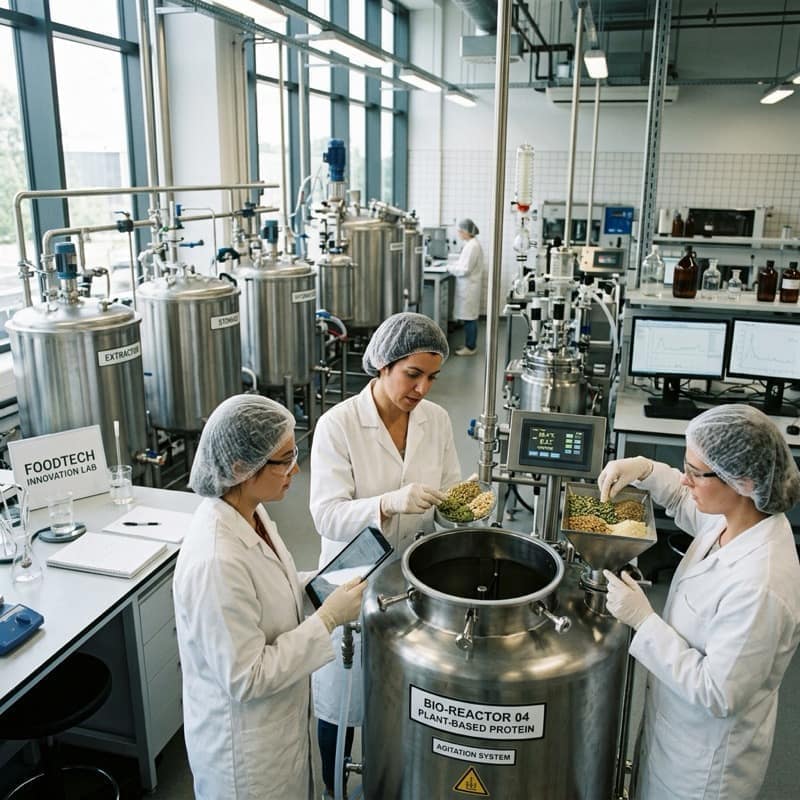
This specific sequence is then inserted into the genome of a microorganism, typically a strain of yeast or fungi. This modified microbe is placed into a bioreactor—a massive, temperature-controlled stainless steel tank reminiscent of those used in beer brewing. Inside the bioreactor, the microbes are fed a steady diet of nutrients, primarily sugars, along with water and oxygen. As they consume the sugars, they undergo fermentation and, guided by their newly inserted genetic instructions, secrete the target ingredient.
Once the fermentation process is complete, the resulting mixture undergoes rigorous purification. The microorganisms are filtered out, leaving behind a pure, isolated ingredient—be it a protein, an enzyme, a fat, or a vitamin. This final product is biologically indistinguishable from its animal-derived counterpart but is produced with a fraction of the environmental footprint.
The Difference Between Traditional and Precision Fermentation
To truly appreciate the leap FoodTech has made, it is essential to understand the difference between traditional and precision fermentation. Traditional fermentation relies on the metabolic processes of microbes to change the overarching nature of a food. For instance, lactobacillus bacteria turn milk into yogurt, and yeast ferments the sugars in malted barley to create beer. The end product is a complex mixture of the original substrate, the microbes, and their metabolic byproducts.
Precision fermentation, on the other hand, is laser-focused. The microbe is merely a vehicle—a miniature, living factory—whose sole purpose is to produce a singular, high-value molecule. The final product is not a fermented food in the traditional sense; it is a highly purified ingredient that can be seamlessly integrated into various food applications, from baking to cheese-making, without imparting any "fermented" flavor profile.
Why FoodTech is Betting Big on Brewed Ingredients
The intersection of technology and food production has never been more critical. With the global population projected to reach nearly 10 billion by 2050, traditional agriculture is facing unprecedented strain. Precision fermentation offers a multi-faceted solution that addresses some of the most pressing challenges of our time.
Sustainability and Environmental Impact
The environmental toll of conventional animal agriculture is well-documented. It requires vast tracts of land, consumes enormous quantities of fresh water, and is a significant contributor to global greenhouse gas emissions. Precision fermentation flips this paradigm on its head.
Brewing ingredients in bioreactors requires exponentially less land and water. A facility utilizing precision fermentation can produce the equivalent amount of protein as a massive dairy farm while occupying a fraction of the physical space. Furthermore, the process generates significantly fewer greenhouse gas emissions. By decentralizing food production and moving it from the field to the fermentation tank, FoodTech companies are creating a more resilient and sustainable food system that is less vulnerable to climate change, droughts, and extreme weather events.
Animal Welfare and Ethical Eating
For many consumers, the ethical implications of factory farming are a major driver in the shift toward plant-based and alternative proteins. Precision fermentation provides a solution that completely removes animals from the equation. We can now enjoy real dairy ice cream, rich and melty cheeses, and juicy, blood-like burgers without a single animal being raised or slaughtered. This ethical alignment resonates deeply with the growing demographic of flexitarians, vegetarians, and vegans who demand high-quality, cruelty-free food options.
Health and Nutritional Precision
Beyond environmental and ethical benefits, precision fermentation allows for unprecedented control over the nutritional profile of our food. Traditional animal products often come with unwanted baggage, such as cholesterol, hormones, antibiotics, and potential allergens. Because brewed ingredients are built from the molecule up, scientists can design products that exclude these undesirable elements.
For instance, companies can produce lactose-free dairy proteins, hypoallergenic egg substitutes, and tailored fats with optimized lipid profiles for better cardiovascular health. This level of precision opens the door to personalized nutrition, where ingredients are customized to meet specific dietary needs and health goals, revolutionizing how we think about the functionality of our food.
Key Players Revolutionizing the Industry
The potential of precision fermentation has catalyzed a massive influx of venture capital, giving rise to a vibrant ecosystem of FoodTech startups and established bio-engineering firms. These pioneers are taking brewed ingredients from the lab to the supermarket shelves.
- Perfect Day and Animal-Free Dairy: Perfect Day is arguably one of the most recognizable names in the precision fermentation space. The company made waves by successfully programming the microflora Trichoderma reesei to produce bovine whey protein. This "animal-free dairy" protein behaves exactly like traditional whey, making it the perfect foundation for a new generation of dairy products.
- Impossible Foods and the Magic of Heme: While Impossible Foods is famous for its plant-based burgers, the secret ingredient that makes their patties bleed and taste like real meat is a product of precision fermentation: soy leghemoglobin, commonly known as heme. Rather than extracting heme from animals, Impossible Foods genetically engineered a strain of yeast to produce heme in massive fermentation tanks.
- The EVERY Company and Egg Proteins: The EVERY Company is tackling another staple of the global diet: the egg. EVERY has focused on brewing specific egg proteins, such as ovalbumin, without the need for chickens. Their animal-free egg proteins offer the same functional properties as traditional eggs, allowing bakers and food manufacturers to create fluffy cakes and clear protein beverages.
The Intersection of Tech and Taste: How AI is Accelerating Discovery
The fusion of FoodTech and artificial intelligence is accelerating the development of brewed ingredients at a breakneck pace. Precision fermentation relies on complex biological systems, and optimizing these systems requires sifting through vast amounts of data. This is where AI and machine learning step in.
Predictive Modeling for Strains
Finding the perfect microbe and the ideal genetic sequence is traditionally a slow, trial-and-error process. Today, AI algorithms can analyze genomic databases to predict which microbial strains will be the most efficient producers of a target ingredient. Machine learning models can simulate thousands of genetic edits in silico, identifying the optimal modifications before a single physical experiment is conducted. This predictive power dramatically reduces research and development time.
Bioreactor Optimization
Once a genetically optimized microbe is placed in a bioreactor, managing its environment is crucial for maximizing yield. Factors such as temperature, pH levels, oxygen flow, and nutrient concentration must be tightly controlled. AI-driven sensors and control systems constantly monitor these variables in real-time, making micro-adjustments to ensure the microbes are operating at peak efficiency. This intelligent automation not only increases the output of the target ingredient but also significantly reduces energy consumption and production costs.
Affiliate Product Recommendations for Home Brewing & Fermentation Enthusiasts
While precision fermentation at the molecular level requires a multi-million-dollar lab, the fundamental science of fermentation is something you can explore in your own kitchen. Whether you are brewing craft beer, making kombucha, or experimenting with cultured foods, having the right equipment makes all the difference.
- ✓ Automated temperature control
- ✓ real-time app monitoring
- ✓ durable stainless steel build
- ✓ easy to clean
- ✗ Takes up significant counter space
- ✗ premium price point
If you're inspired by the biotechnology of brewed ingredients, starting with a smart home brewing system is a fantastic way to understand the magic of microbes. Systems like the Kegerator Pro offer the precise temperature control that is vital for successful fermentation, giving you a taste of the technology used in massive FoodTech bioreactors.
Regulatory Hurdles and the Path Forward
Despite the rapid technological advancements and obvious environmental benefits, the widespread adoption of precision fermentation faces significant regulatory and cultural hurdles.
Navigating the FDA and Global Standards
Because precision fermentation involves genetic engineering, the resulting products are subject to stringent regulatory scrutiny. In the United States, companies must navigate the FDA's Generally Recognized as Safe (GRAS) notification process. They must rigorously prove that the genetically modified microbes used in production are safely removed and that the final, purified ingredient is molecularly identical to its natural counterpart and safe for human consumption. Globally, the regulatory landscape is fragmented, which poses challenges for startups aiming for international distribution.
Consumer Acceptance and Marketing 'Brewed' Ingredients
Perhaps the most significant hurdle is consumer perception. The idea of food produced in a lab via genetically modified microbes can be unsettling to some. To combat this, FoodTech companies are investing heavily in transparent marketing and consumer education. The term "brewed ingredients" itself is a strategic choice. By drawing parallels to the familiar and universally beloved process of brewing beer, companies aim to demystify the technology and shift public perception from "lab-made" to "artisanally brewed."
What's Next for Precision Fermentation?
The future of precision fermentation is incredibly promising. As the technology matures, we can expect to see a broadening of the ingredients being produced. Beyond dairy and meat proteins, researchers are exploring the synthesis of complex carbohydrates, rare flavor compounds, and even structured fats that mimic the melt profile of palm oil without the associated deforestation.
Furthermore, the concept of "upcycled brewing" is gaining traction. This involves using the spent grains and yeast from traditional beer brewing—often considered waste—as nutrient-rich substrates for precision fermentation bioreactors. This closed-loop system embodies the principles of the circular economy, maximizing resource efficiency and minimizing waste.
The Holy Grail for the industry remains cost parity. As AI optimization improves yields and bioreactor infrastructure scales up globally, the cost of brewed ingredients will inevitably fall. When animal-free dairy and meat become cheaper than their conventional counterparts, we will witness a massive, consumer-driven shift in the global food supply chain.
Conclusion
Precision fermentation is not merely a passing trend; it is a fundamental reimagining of how we source our food. By leveraging the ancient science of brewing and supercharging it with modern genetic engineering and artificial intelligence, FoodTech companies are creating a future where culinary delight does not come at the expense of our planet or its animals.
The era of brewed ingredients is here, and it is transforming everything from the milk in your morning coffee to the burger on your dinner plate. As we continue to refine these cellular factories, the possibilities for sustainable, nutritious, and delicious food are truly limitless.
Swayam tests AI tools, gadgets, and developer platforms hands-on before writing about them. His work focuses on making complex tech approachable — without the hype. He has covered over 75 products across AI, gadgets, and software for TechPixelly.