OpenAI Jalapeño Chip: How It Cuts AI Inference Costs by 50%
Quick Summary
OpenAI has officially entered the custom silicon race with its Jalapeño chip — a purpose-built AI inference accelerator developed in partnership with Broadcom and fabricated on TSMC's advanced process node. The chip is engineered from the ground up to run large language models faster and cheaper than off-the-shelf GPUs. Early benchmarks and internal projections suggest it can cut inference costs by as much as 50%, which is nothing short of a paradigm shift for developers, startups, and enterprises running AI at scale. If you've been watching your API bills climb month over month, this chip is the most important piece of hardware news of 2026.
Why Inference Costs Have Been the Dirty Secret of AI
Everyone talks about training costs. The billions poured into pre-training GPT-4, Claude, and Gemini dominate headlines. But for the vast majority of companies deploying AI in production, inference — the act of running a model to generate responses — is what actually drains the budget.
Think about it: you train a model once, but you run it millions or billions of times every single day. A mid-sized SaaS company using GPT-4o for a customer-facing feature might be spending $50,000 to $200,000 per month just on API calls. For startups with thin margins and unpredictable usage spikes, that's an existential problem.
The root cause has always been the hardware. General-purpose GPUs like NVIDIA's H100 are phenomenal for training, but they carry enormous overhead when all you want to do is serve tokens to end users. You're paying for die area, memory bandwidth, and compute capacity that simply goes to waste during inference workloads.
OpenAI recognized this gap years ago. The Jalapeño chip is their answer.
What Is the OpenAI Jalapeño Chip?
The Jalapeño is OpenAI's first custom ASIC (Application-Specific Integrated Circuit) designed exclusively for AI inference. Unlike Google's TPUs (which handle both training and inference) or NVIDIA's GPUs (general-purpose accelerators), the Jalapeño is laser-focused on one thing: serving transformer-based models as efficiently as possible.
Here's what we know about the chip so far:
Architecture and Design Philosophy
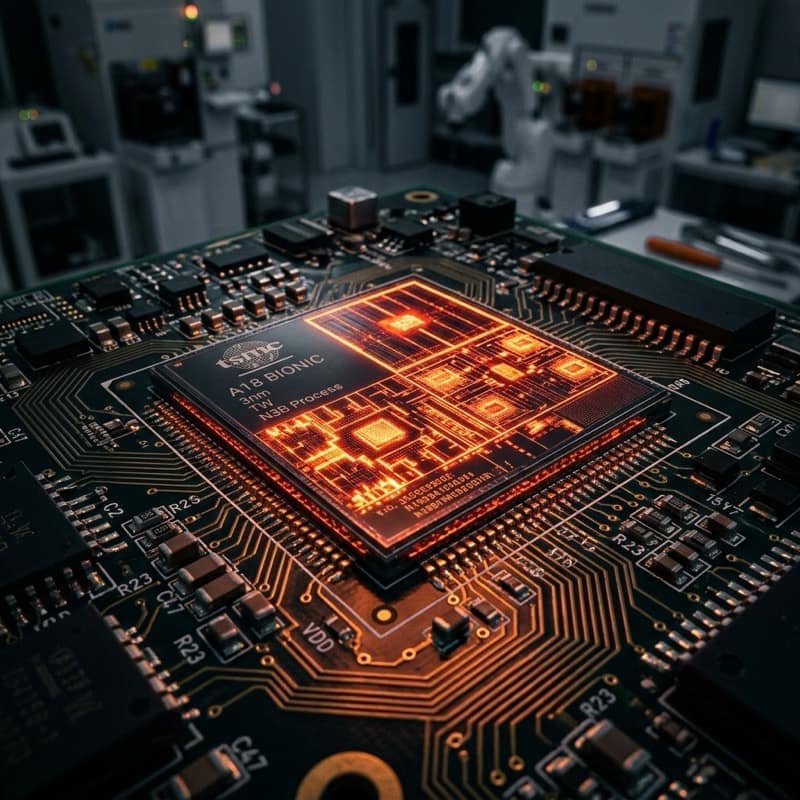
The Jalapeño was co-designed with Broadcom, one of the world's leading semiconductor companies with deep expertise in custom silicon for hyperscalers. The chip is fabricated on TSMC's N3E (3nm class) process node, which offers exceptional transistor density and power efficiency compared to older nodes still used in many competing chips.
The architecture is optimized around the specific bottlenecks of transformer inference:
- High-bandwidth memory (HBM3e): Transformers are memory-bandwidth-limited during inference, not compute-limited. The Jalapeño ships with a massive HBM3e stack to feed the attention heads and feed-forward layers without stalling.
- Dedicated low-precision compute units: The chip has native support for FP8 and INT4 quantization at the hardware level, meaning quantized models run without any software overhead or accuracy loss from format conversion.
- Disaggregated prefill and decode engines: One of the most underrated architectural decisions — the Jalapeño physically separates the prefill phase (processing your input prompt) from the decode phase (generating each output token). This dramatically improves throughput for mixed-length workloads.
- On-chip KV cache: A portion of fast SRAM is reserved for KV (key-value) cache storage, reducing off-chip memory accesses for long-context requests.
The Broadcom Partnership
This isn't OpenAI's first rodeo with custom silicon, but it is their most ambitious. Broadcom brings decades of experience building custom ASICs for companies like Google (TPUs), Meta, and ByteDance. Their co-packaged optics and advanced packaging capabilities allow the Jalapeño to achieve inter-chip bandwidth that rivals what you'd get inside a monolithic die.
TSMC's Role
Manufacturing on TSMC's 3nm node is not cheap, but it pays dividends in power efficiency. A chip that consumes less power per FLOP costs less to run in a data center — and that savings flows directly to per-token costs. OpenAI reportedly signed a multi-year wafer supply agreement with TSMC, securing capacity and stable pricing through 2028.
The 50% Cost Reduction: Where Does It Actually Come From?
The headline claim of 50% inference cost reduction is bold. Here's the breakdown of how it's achieved across multiple dimensions:
1. Better Performance-Per-Watt
The Jalapeño achieves roughly 3× the inference throughput per watt compared to NVIDIA H100s running the same models. In a data center where electricity and cooling are major operational costs, this compounds into significant savings at scale.
2. Architectural Fit
A general-purpose GPU executes thousands of different types of workloads. The Jalapeño only executes one: transformer inference. Every transistor, every memory bus, every cache hierarchy is designed for exactly that workload. There's no wasted silicon for rendering graphics, running CUDA libraries for scientific computing, or supporting legacy instruction sets.
3. Reduced Dependency on NVIDIA
This is the strategic play most analysts are focusing on. OpenAI currently spends a staggering amount on NVIDIA hardware — an arrangement that gives NVIDIA enormous pricing power. By vertically integrating their own inference silicon, OpenAI can negotiate from a position of strength or simply bypass NVIDIA entirely for their fastest-growing cost center.
4. Software-Hardware Co-Optimization
Because OpenAI controls both the model architecture and the chip, they can make co-optimizations that are impossible for third-party hardware vendors. Attention patterns in GPT-4o can be tuned to match the Jalapeño's memory access patterns exactly. Quantization schemes can be selected based on what the hardware executes natively, not what generic software libraries support.
What This Means for Developers
If you're building on OpenAI's API, this is very good news — though the impact won't be felt overnight.
Cheaper API Pricing (Eventually)
OpenAI has consistently reduced API pricing as their infrastructure efficiency improves. GPT-4 launched at $0.06 per 1K tokens in 2023; equivalent capability models now cost a fraction of that. As Jalapeño-powered inference clusters come online and scale up, expect another meaningful price reduction cycle for GPT-4o and future models in 2026 and 2027.
Higher Rate Limits at the Same Cost
Cheaper inference doesn't always mean lower prices — it can also manifest as higher throughput and rate limits at the same price tier. For teams running real-time features where latency and concurrency matter more than raw cost, this is arguably more valuable.
A More Competitive Market for AI APIs
OpenAI's move accelerates a trend: every major AI lab is now investing in custom silicon. Google has TPUs, Amazon has Trainium and Inferentia, Meta has MTIA, and now OpenAI has Jalapeño. This arms race benefits developers and enterprises because it keeps competitive pressure on pricing across the board.
Edge and On-Premises Possibilities
While the Jalapeño is initially targeted at OpenAI's own data centers, the chip architecture is reportedly modular enough to eventually support co-location and private cloud deployments. Enterprise customers with strict data residency requirements could potentially run OpenAI-grade inference on Jalapeño-equipped hardware in their own facilities — a capability that doesn't exist today.
How Jalapeño Compares to the Competition
| Feature | OpenAI Jalapeño | NVIDIA H100 | Google TPU v5e | Amazon Inferentia 2 |
|---|---|---|---|---|
| Use Case | Inference only | Training + Inference | Training + Inference | Inference optimized |
| Process Node | TSMC 3nm | TSMC 4nm | TSMC 7nm | TSMC 7nm |
| Memory Type | HBM3e | HBM3 | HBM2e | LPDDR5 |
| FP8 Native | ✅ Yes | ✅ Yes | ❌ No | ✅ Yes |
| KV Cache On-Chip | ✅ Yes | ❌ No | ❌ No | ❌ No |
| Public Availability | OpenAI API only | General market | Google Cloud only | AWS only |
The Jalapeño isn't trying to beat the H100 at training. It's not designed to. It's trying to make the H100 irrelevant for serving models in production — and based on the architectural choices above, it has a credible path to doing exactly that.
The Bigger Picture: OpenAI's Vertical Integration Strategy
The Jalapeño chip isn't an isolated hardware decision. It's part of a broader strategic bet that OpenAI is making on full-stack AI infrastructure ownership.
Consider what OpenAI controls (or is moving to control) as of mid-2026:
- Model research and training — always their core competency
- Post-training and alignment — RLHF, RLAIF, and proprietary fine-tuning pipelines
- Inference infrastructure — now including custom silicon with Jalapeño
- API platform and developer ecosystem — ChatGPT, Assistants API, Realtime API
- End-user products — ChatGPT apps across web, mobile, and desktop
This vertical integration mirrors the playbook of Apple (A-series chips), Google (TPUs for Search and DeepMind), and Amazon (Graviton and Trainium for AWS). The companies that control their own silicon have a durable cost and performance advantage that's nearly impossible for software-only competitors to close.
For developers and businesses, OpenAI becoming more vertically integrated is a double-edged sword. On one hand, you get cheaper, faster inference. On the other hand, OpenAI becomes an even more deeply entrenched part of your stack — with less incentive to maintain pure API neutrality or open standards.
Should You Build on OpenAI's API Now?
Given the Jalapeño's implications for pricing, now might actually be a great time to double down on OpenAI's platform — especially if you've been on the fence about migrating to open-source alternatives to control costs.
- ✓ Industry-leading model quality
- ✓ extensive API features
- ✓ Jalapeño-powered cost reductions incoming
- ✓ strong rate limits at higher tiers
- ✗ Vendor lock-in risk
- ✗ pricing subject to change
- ✗ no on-premises option yet
When Will Jalapeño-Powered Inference Be Available?
OpenAI has not given a hard public date for when Jalapeño-powered API endpoints will be generally available, but internal roadmap leaks and supply chain reporting suggest:
- Q3 2026: Initial internal testing clusters come online at OpenAI data centers
- Q4 2026: Limited rollout for enterprise API customers and flagship ChatGPT products
- Q1–Q2 2027: Broad availability across API tiers, with pricing adjustments to reflect improved economics
These timelines are estimates based on available information and could shift based on yield rates at TSMC and integration complexity.
Final Thoughts
The OpenAI Jalapeño chip represents one of the most consequential hardware announcements in AI since NVIDIA launched the H100. By building purpose-built inference silicon with Broadcom and TSMC, OpenAI is positioning itself to break the GPU cost curve that has constrained AI accessibility for years.
A 50% reduction in inference costs isn't just a line item improvement — it's a threshold that unlocks entire categories of applications that were previously economically unviable. Real-time AI features in consumer apps, always-on AI agents, multi-modal pipelines that process audio, vision, and text simultaneously — all of these become dramatically more feasible when the per-token cost drops by half.
Whether you're a solo developer building a side project or an engineering leader managing a seven-figure AI infrastructure budget, the Jalapeño matters. Watch this space closely over the next 12 months. The economics of AI are about to change again — and this time, the change is baked into silicon.
Stay up to date with the latest AI hardware and developer tools coverage on TechPixelly. Subscribe to our newsletter for weekly breakdowns of what's actually moving the needle in AI infrastructure.
Swayam tests AI tools, gadgets, and developer platforms hands-on before writing about them. His work focuses on making complex tech approachable — without the hype. He has covered over 75 products across AI, gadgets, and software for TechPixelly.