Harness Engineering: The New Frontier in AI Model Orchestration
Quick Summary
The raw intelligence gap between top AI models is narrowing fast. GPT-5, Claude Opus 4, Gemini Ultra — they all perform remarkably well on the same benchmarks. So what separates the companies actually shipping transformative AI products from those still spinning their wheels? It's not the model. It's the harness — the system of routing, memory, evaluation, and orchestration logic wrapped around the model. Harness engineering is the new competitive moat, and understanding it could be the most important thing you do for your AI strategy this year.
The Benchmarks Are Converging. Now What?
There was a time when picking an AI model was easy: you just picked the best one. GPT-4 was the obvious king for months. Then Claude stepped up. Then Gemini. Then open-source models like Llama 3 started biting at everyone's heels. Fast forward to mid-2026, and evaluations like MMLU, HumanEval, and MATH show scores so close together that the margin of error on the benchmark itself sometimes exceeds the performance gap between models.
This convergence isn't a coincidence — it's the natural result of massive investment, shared research papers, and the relentless competitive pressure between OpenAI, Anthropic, Google DeepMind, and Meta. Everyone is training on similar data pipelines, using similar RLHF techniques, and iterating at breakneck speed.
What this means for builders and enterprises is profound: the model is no longer the strategy. The strategy is how you use the model.
Enter harness engineering.
What Is Harness Engineering?
The term "harness" comes from software testing — a test harness is the scaffolding you build around a system to observe, control, and verify its behavior. Harness engineering in the AI context borrows that same philosophy and applies it to model orchestration at scale.
A model harness is the full system surrounding an AI model, including:
- Routing logic — Deciding which model handles which task, based on cost, latency, capability, or context.
- Memory and context management — Storing, retrieving, and injecting relevant context so the model has what it needs without blowing the token budget.
- Prompt engineering and versioning — Treating prompts as first-class engineering artifacts, complete with version control, A/B testing, and regression checks.
- Evaluation pipelines — Continuously measuring output quality using both automated metrics and human feedback loops.
- Fallback and retry logic — Gracefully handling model failures, rate limits, or degraded outputs without breaking the user experience.
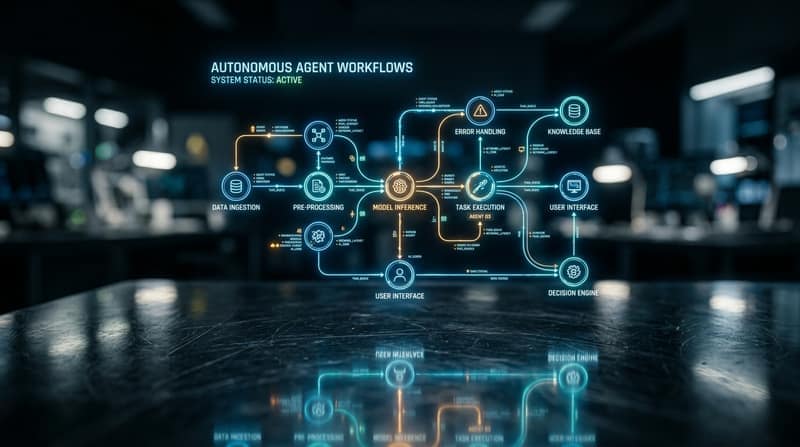
- Tool use and agent coordination — Orchestrating multi-step agentic workflows where models call APIs, browse the web, write code, and collaborate with other models.
If the model is the engine, the harness is the chassis, transmission, fuel system, and dashboard combined. You can swap engines, but the vehicle is defined by everything else.
Why This Matters More Than Ever
The Cost Equation Has Flipped
A year ago, the dominant concern was capability — could the model even do the task? Today, for most production use cases, the answer is yes. The new constraint is economics.
GPT-5's frontier performance doesn't come cheap. Neither does Claude Opus 4. But for a huge swath of tasks — classification, summarization, simple Q&A, data extraction — a smaller, cheaper model performs just as well as the flagship. Harness engineers are building intelligent routers that automatically select the cheapest model that can handle a given request with the required quality level.
Companies like OpenRouter, LiteLLM, and Martian have built entire businesses on this idea. The savings at scale are real: some teams report 40-70% cost reduction after deploying intelligent routing without any drop in output quality.
Reliability Is Now a Product Feature
When you're building a consumer or enterprise product on top of AI, uptime and consistency aren't nice-to-haves — they're table stakes. A single model provider going down, hitting rate limits, or degrading in output quality can take your product offline.
Harness engineering introduces multi-provider redundancy. Your system might normally route to Claude for nuanced reasoning tasks, but if Anthropic's API returns elevated latency, the harness automatically falls back to GPT-4o or a locally hosted Mistral instance — all without the user noticing.
This kind of resilience is something a raw API call to a single model can never provide.
Evaluation Is the Hidden Superpower
Here's a dirty secret of the AI industry: most teams shipping AI features have almost no systematic way to know if a new model version or prompt change made their product better or worse. They ship, hope, and check customer complaints.
Harness engineering changes this by treating evaluation as a core infrastructure concern. A mature harness includes:
- Golden datasets — Curated input/output pairs that represent ideal behavior across key use cases.
- Automated regression checks — Every time a prompt or model is updated, the harness runs it against the golden dataset and flags regressions before they hit production.
- LLM-as-judge pipelines — Using a powerful model (often GPT-4o or Claude Sonnet) to evaluate the outputs of a faster, cheaper model at scale.
- User feedback loops — Capturing thumbs up/down signals, edits, and re-generations to continuously improve the dataset.
Teams that invest in evaluation infrastructure compound their advantage over time. They can move faster, take more risks, and upgrade models with confidence.
The Architecture of a Modern Harness
Let's get concrete. What does a well-engineered AI harness actually look like in production?
Layer 1: The Intake and Classification Layer
Every request enters the harness and is immediately classified. What kind of task is this? How complex is it? What's the acceptable latency? What's the quality bar? This classification might itself be done by a lightweight model — a fast, cheap classifier that tags the request so downstream routing can be smarter.
Layer 2: The Router
Based on the classification, the router selects the optimal model. It might use a simple rule-based system for well-understood task types ("always use Claude for long-form writing over 2,000 words") or a learned routing model that continuously improves based on cost-quality tradeoffs observed in production.
Layer 3: Context and Memory
Before the request hits the model, the harness retrieves and injects relevant context. This might be:
- Short-term conversational memory from the current session
- Long-term user preferences stored in a vector database
- Retrieved documents from a RAG (Retrieval-Augmented Generation) pipeline
- Tool outputs from previous steps in an agentic workflow
The harness is responsible for packing this context intelligently — prioritizing recency, relevance, and fit within the token budget.
Layer 4: The Model Call
This is the part most people think of when they think about AI. It's one layer.
Layer 5: Output Parsing and Validation
The model's raw output often isn't directly usable. The harness parses structured outputs (JSON, code, lists), validates them against expected schemas, and triggers retries with corrective prompts if the output is malformed. This retry logic alone can dramatically improve the effective reliability of even the most capable models.
Layer 6: Evaluation and Logging
Every request-response pair is logged with full metadata: which model was used, token counts, latency, cost, any retry attempts, and the final output. This telemetry feeds the evaluation pipelines described earlier and gives the team a real-time window into system health.
Tools That Are Defining the Space
The harness engineering ecosystem is maturing rapidly. A few tools worth knowing:
LangChain and LangGraph remain the most widely adopted frameworks for building orchestration logic, particularly for agentic workflows. LangGraph's graph-based approach to multi-step reasoning is increasingly used for complex, conditional agent pipelines.
LiteLLM provides a unified API layer across 100+ model providers, making multi-provider routing significantly easier to implement.
Braintrust and Langfuse are emerging as the go-to evaluation and observability platforms — they handle logging, dataset management, and LLM-as-judge evaluation at scale.
Portkey AI is another powerful entrant offering an AI gateway with built-in routing, caching, fallbacks, and observability designed specifically for production harness architectures.
- ✓ Unified gateway for 200+ models
- ✓ built-in fallbacks and load balancing
- ✓ detailed observability dashboard
- ✓ prompt versioning and A/B testing
- ✓ SOC 2 compliant
- ✗ Advanced features require paid plan
- ✗ some learning curve for complex routing configs
The Human Side of Harness Engineering
It's easy to think about harness engineering purely as an infrastructure problem. But there's a deeply human element to it that often gets overlooked.
A harness encodes your team's judgment about what good looks like. Every routing rule, every prompt template, every golden dataset example is a decision made by a person about what matters. The harness is, in a real sense, the institutional knowledge of your AI team made executable.
This has important implications for hiring. The most valuable AI engineers in 2026 aren't necessarily the ones who can fine-tune a transformer from scratch — it's the ones who can design robust evaluation pipelines, build intelligent routing systems, and think systematically about how to maintain quality as models and requirements evolve. A new job category is crystallizing: the harness engineer, sitting at the intersection of ML engineering, platform engineering, and product thinking.
Common Mistakes Teams Make
Even teams that understand harness engineering conceptually often fall into predictable traps:
1. Treating the prompt as code, not data. Prompts need version control, testing, and staging environments, just like application code. Editing a prompt directly in production is the AI equivalent of hotfixing a database schema.
2. Skipping evaluation until something breaks. By the time you notice quality has degraded through customer complaints, you've already lost trust. Evaluation infrastructure should be built before you go to production, not after.
3. Over-engineering the router. It's tempting to build an incredibly sophisticated routing system on day one. But a simple, well-tested set of routing rules usually beats a complex ML-based router that's hard to debug when it misbehaves. Start simple. Add complexity where data proves you need it.
4. Ignoring cold-start context problems. New users have no history, no preferences, no context. Harnessess that work beautifully for established users often deliver degraded experiences for new ones. Design for the cold-start case explicitly.
Where This Is All Heading
Harness engineering is still a young discipline, but it's evolving at remarkable speed. A few trends to watch:
Standardization is coming. Right now, every team builds their harness from scratch or stitches together a mix of open-source tools. Over the next 18-24 months, expect more opinionated, batteries-included platforms to emerge — similar to how Kubernetes standardized container orchestration.
Models will become more harness-aware. Next-generation models are being designed with better structured output guarantees, native tool use, and richer metadata about uncertainty. This makes certain harness components simpler to build and more reliable.
Evaluation will become automated end-to-end. The manual curation of golden datasets is a bottleneck today. Expect AI-assisted dataset generation and automated adversarial testing to dramatically accelerate the evaluation loop.
The companies that invest in harness engineering now are building something that compounds. Every evaluation run makes the dataset richer. Every routing decision makes the router smarter. Every production incident makes the fallback logic more robust. This is a flywheel, and the teams that start spinning it early will find it very hard to catch up with.
Final Thoughts
The era of "just call the GPT-4 API" is over. Not because GPT-4 isn't powerful — it still is — but because raw model access without a thoughtful harness is like having a Formula 1 engine bolted to a go-kart. You're leaving most of the performance, reliability, and efficiency on the table.
Harness engineering is how serious AI teams are differentiating in 2026. It's not glamorous. It doesn't make the conference keynote. But it's the difference between an AI feature that works in a demo and an AI product that works in production, at scale, day after day.
If you're building with AI and you haven't thought deeply about your harness yet, now is the time to start.
Swayam tests AI tools, gadgets, and developer platforms hands-on before writing about them. His work focuses on making complex tech approachable — without the hype. He has covered over 75 products across AI, gadgets, and software for TechPixelly.