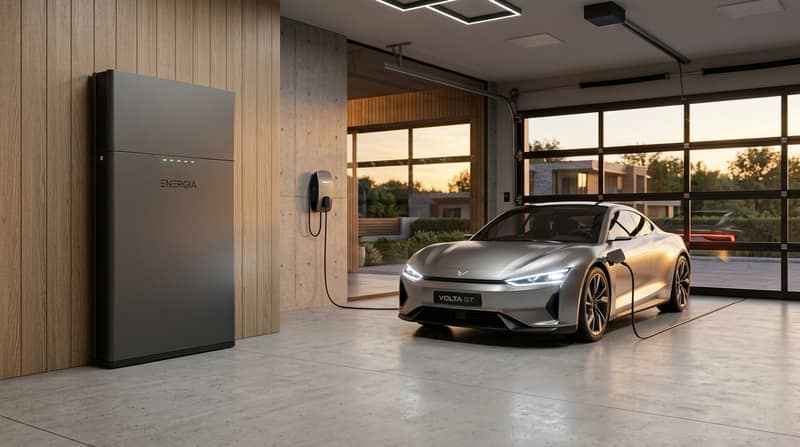
Everything-to-grid energy
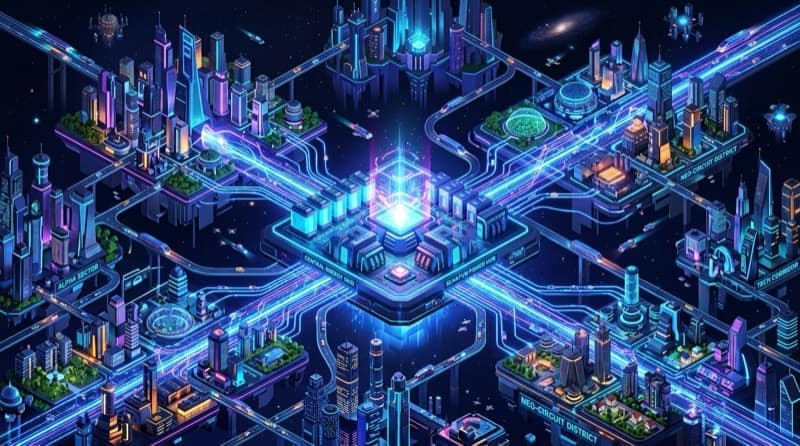
Quick Summary
- The Core Concept: Everything-to-grid (X2G) goes beyond vehicle-to-grid (V2G) by incorporating almost any connected device into a dynamic, bi-directional energy exchange system.
- Why It Matters: This decentralization of power generation and storage increases grid resilience, accelerates the transition to renewable energy, and opens up new economic models for everyday consumers.
- Key Challenges: Standardization, cybersecurity, grid modernization, and battery degradation remain significant hurdles to mainstream adoption.
- The Future Landscape: We are rapidly moving toward a peer-to-peer energy economy where your smart appliances, solar panels, and electric vehicles collectively act as virtual power plants.
If you’ve been keeping an eye on the energy sector lately, you’ve probably heard the buzzword "Vehicle-to-Grid" (V2G). The idea that your electric car could power your house during an outage—or even sell juice back to the grid during peak hours—is genuinely mind-blowing. But what if we took that concept and applied it to… well, everything?
Welcome to the era of Everything-to-Grid (X2G) energy.
This emerging paradigm shift is redefining our relationship with electricity. It’s no longer a one-way street where massive power plants generate electricity and we passively consume it. Instead, X2G envisions a highly interconnected, decentralized network where homes, vehicles, commercial buildings, and even smart appliances act as micro-generators and micro-batteries.
In this comprehensive guide, we’re going to dive deep into what X2G energy means, how it works, the massive benefits it offers, and the challenges we need to overcome to make this futuristic vision our daily reality.
What Exactly is Everything-to-Grid (X2G)?
To understand X2G, we first need to look at how our traditional power grid operates. For over a century, the grid has been a centralized system. Huge power plants (often burning fossil fuels) generate electricity, which is then transmitted over long distances through high-voltage lines, stepped down through transformers, and eventually delivered to our homes and businesses. It’s a rigid, top-down approach.
Everything-to-Grid (X2G) fundamentally flips this model on its head.
The "X" in X2G is a variable that stands for "Everything." It encompasses several sub-categories that you might already be familiar with:
- V2G (Vehicle-to-Grid): Electric vehicles feeding power back into the grid.
- V2H (Vehicle-to-Home): EVs powering your specific residence during an outage or peak pricing.
- V2B (Vehicle-to-Building): EVs providing backup or load balancing for commercial buildings.
- B2G (Building-to-Grid): Commercial or residential buildings using integrated solar and battery storage to interact with the grid.
- D2G (Device-to-Grid): Smaller smart appliances modifying their power draw (or releasing micro-bursts of stored energy) based on grid demand.
X2G is the umbrella term for an ecosystem where all these endpoints communicate, coordinate, and trade energy in real-time. It transforms passive consumers into active "prosumers"—people who both produce and consume energy.
The Mechanics: How X2G Actually Works
So, how do we get a refrigerator, an electric truck, and a local power substation to talk to each other? The magic of X2G relies on three core technological pillars:
1. Bi-Directional Charging and Inverters
Traditional electrical flow is strictly one-way. For X2G to work, we need hardware capable of bi-directional flow. When you plug in an EV or a home battery system, bi-directional inverters allow the device to both draw alternating current (AC) from the grid and convert it to direct current (DC) for storage, and convert that stored DC back into AC to push it back into the grid when needed.
2. The Internet of Things (IoT) and Smart Meters
Hardware alone isn't enough; the system needs a brain. Smart meters and IoT sensors act as the nervous system of the X2G network. These devices monitor energy consumption, track real-time grid demand, and communicate with the utility company. If the grid is stressed on a hot summer afternoon, your smart meter knows exactly when to tell your EV to stop charging or instruct your smart thermostat to tweak the AC by one degree.
3. Artificial Intelligence and Predictive Analytics
To manage millions of decentralized energy nodes, human operators just won't cut it. X2G relies heavily on AI algorithms. These algorithms predict weather patterns (which affect solar and wind generation), analyze historical usage data, and make split-second decisions on where energy needs to go. They buy low, sell high, and keep the grid stabilized without human intervention.
If you're looking to start your journey toward becoming a "prosumer," understanding your current energy baseline is step one. Smart monitors like the Emporia are invaluable for tracking exactly where your electricity goes before you start feeding it back into the grid.
The Compelling Benefits of an X2G Ecosystem
Why are tech giants, automakers, and utility companies pouring billions into X2G technology? Because the potential benefits are staggeringly high across multiple vectors: environmental, economic, and infrastructural.
Accelerating the Renewable Energy Transition
The biggest problem with renewable energy like solar and wind is that they are intermittent. The sun doesn't always shine, and the wind doesn't always blow. Traditionally, this meant we had to rely on "peaker plants"—highly polluting natural gas plants that spin up quickly to meet demand when renewables fall short.
X2G solves this by turning our collective devices into a massive, decentralized battery. When the sun is blazing at noon, excess solar energy charges millions of EVs and home batteries. When the sun goes down and everyone starts cooking dinner (peak demand), those same EVs and batteries feed that clean energy back into the grid. It smooths out the "duck curve" of renewable energy generation.
Unprecedented Grid Resilience
Extreme weather events are on the rise, and our aging, centralized grid infrastructure is struggling to keep up. A single downed tree on a transmission line can plunge thousands of homes into darkness.
X2G creates a self-healing, decentralized mesh network. If a main transmission line goes down, neighborhoods equipped with X2G technology can form "microgrids." Your house could theoretically run off your neighbor's massive EV battery, combined with your own rooftop solar, keeping the lights on and the fridge cold while utility workers repair the main lines.
Economic Incentives: Earning While You Sleep
For the everyday consumer, this might be the most exciting aspect of X2G. Right now, a car sits parked and useless for about 95% of its life. With X2G, your car becomes an income-generating asset.
Utility companies are willing to pay a premium for electricity during peak demand hours. Through automated smart contracts, your vehicle could buy electricity at 2:00 AM when it's dirt cheap (or free, if you have wind power on the grid), and automatically sell 15% of that charge back to the utility at 6:00 PM when prices peak. You wake up with a fully charged car and a credit on your electricity bill.
The Rise of Virtual Power Plants (VPPs)
As X2G technology scales, it enables the creation of Virtual Power Plants (VPPs). A VPP isn't a physical building with smokestacks; it's a cloud-based network that aggregates the capacities of thousands of distributed energy resources (DERs).
Imagine a software platform connecting 50,000 residential solar panels, 20,000 electric vehicles, and 100,000 smart thermostats across a city. When the grid operator needs an extra 50 megawatts of power to prevent a blackout, they don't fire up a coal plant. Instead, they ping the VPP.
In milliseconds, the VPP pauses the charging of 10,000 EVs, drops the AC in 30,000 homes by a fraction of a degree, and pulls a tiny amount of power from 5,000 home battery walls. The grid stabilizes instantly, no fossil fuels are burned, and the participating homeowners receive micro-payments for their contribution. VPPs are the ultimate realization of the X2G vision.
Overcoming the Bottlenecks: What's Holding Us Back?
If X2G is so incredible, why isn't every home operating as a mini power plant today? Transitioning from a century-old infrastructure to a highly intelligent, decentralized grid is fraught with challenges.
The Standardization Struggle
Right now, the X2G landscape is heavily fragmented. Tesla has its ecosystem, Ford is pushing its own bi-directional tech, and various smart home protocols (Zigbee, Z-Wave, Matter, Thread) are battling for dominance. For X2G to truly work on a macro scale, we need universal communication standards. A Ford F-150 Lightning needs to talk seamlessly to an LG smart fridge and a local PG&E substation using the exact same digital language. While standards like ISO 15118 (for V2G communication) are gaining traction, widespread adoption is slow.
Battery Degradation Concerns
One of the most common consumer hesitations regarding X2G, particularly V2G, is battery life. Lithium-ion batteries degrade with every charge and discharge cycle. If your car is constantly cycling energy back and forth with the grid, will the battery die prematurely?
Modern battery management systems (BMS) are incredibly sophisticated and can limit the depth of discharge to minimize wear. Furthermore, studies have suggested that smart, shallow cycling can sometimes actually prolong battery life compared to letting a car sit at 100% state-of-charge for days. Still, automakers need to update their warranty structures to explicitly cover X2G usage to alleviate consumer anxiety.
Grid Infrastructure Upgrades
The physical wires on our streets weren't built for bi-directional flow. Local transformers are designed to step voltage down for residential use, not handle massive surges of power flowing upstream from thousands of EVs simultaneously. Utility companies need to invest billions in upgrading local distribution networks and installing smart transformers before neighborhood-wide X2G becomes feasible.
Cybersecurity Risks
When you connect your car, your thermostat, and your home battery to a massive, internet-connected grid, you inherently increase the attack surface for malicious actors. A coordinated cyberattack on a VPP could theoretically cause synchronized power surges or localized blackouts. Securing the communication pathways of X2G devices using advanced encryption and blockchain technology will be paramount.
How to Prepare for the X2G Revolution
You don't have to wait until 2035 to start engaging with the X2G transition. If you want to position yourself as a proactive "prosumer," here are a few steps you can take today:
- Invest in Smart Home Tech: Start small. Upgrade to a smart thermostat, smart plugs, and intelligent energy monitors. Getting comfortable with automated, scheduled energy usage is the foundation of X2G.
- Look for Bi-Directional Capability: If you are in the market for an EV, research its V2G or V2H capabilities. Vehicles like the Hyundai Ioniq 5, Kia EV6, and Ford F-150 Lightning already support varying degrees of bi-directional charging. Ensure the EV charger you install at home is also physically capable of two-way flow.
- Explore Time-of-Use (TOU) Rates: Contact your utility company and see if they offer Time-of-Use pricing. Shifting your heavy energy usage (laundry, EV charging, dishwasher) to off-peak hours not only saves you money but familiarizes you with the concept of dynamic energy pricing.
- Consider Solar and Storage: If your budget allows, a rooftop solar setup combined with a home battery system (like the Tesla Powerwall or Enphase IQ Battery) essentially turns your home into a self-contained microgrid today.
Conclusion: A Resilient, Decentralized Future
The Everything-to-Grid (X2G) concept is far more than just a clever engineering trick; it is a fundamental reimagining of our society's relationship with power. By breaking down the barriers between consumer and producer, X2G democratizes energy.
It takes the massive, unwieldy, and fragile centralized grid and transforms it into an agile, highly responsive, and robust network. It ensures that the transition to renewable energy isn't hampered by the intermittency of the sun and wind, but rather supported by the millions of batteries sitting in our garages and basements.
While challenges in standardization, infrastructure, and cybersecurity remain, the economic and environmental imperatives are too strong to ignore. The question is no longer if our devices will connect to the grid, but rather how soon we can scale this technology to power the future.
The next time you plug in your electric car or hear your smart fridge hum, remember: you aren't just consuming power. You're looking at a vital node in the energy network of tomorrow.
Swayam tests AI tools, gadgets, and developer platforms hands-on before writing about them. His work focuses on making complex tech approachable — without the hype. He has covered over 75 products across AI, gadgets, and software for TechPixelly.